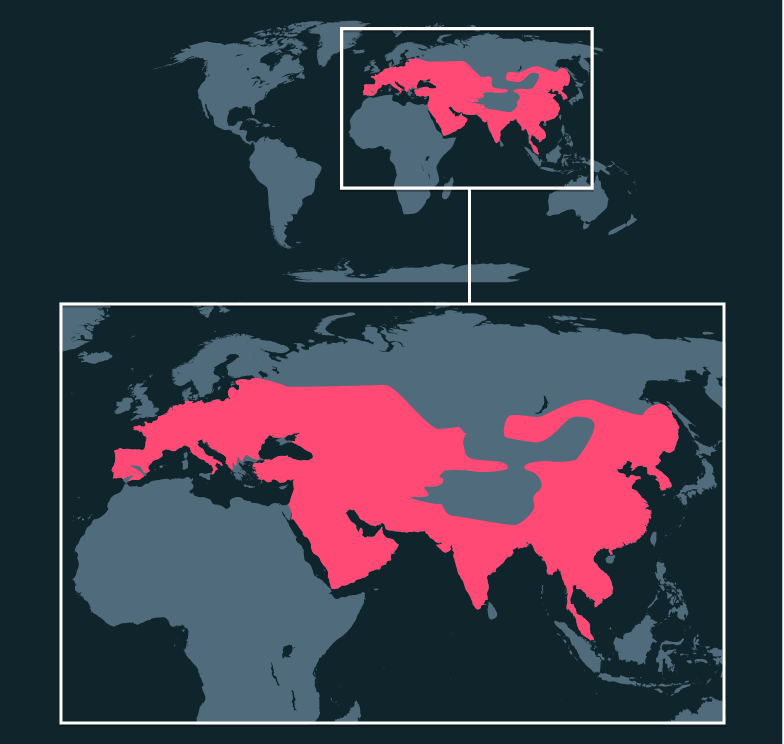
The wild boar (or Sus scrofa), also known as the Eurasian wild pig, is a pig native throughout the temperate regions of Europe, Asia, and areas of Northern Africa. It has also been introduced to North America, South America and Oceania.
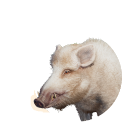
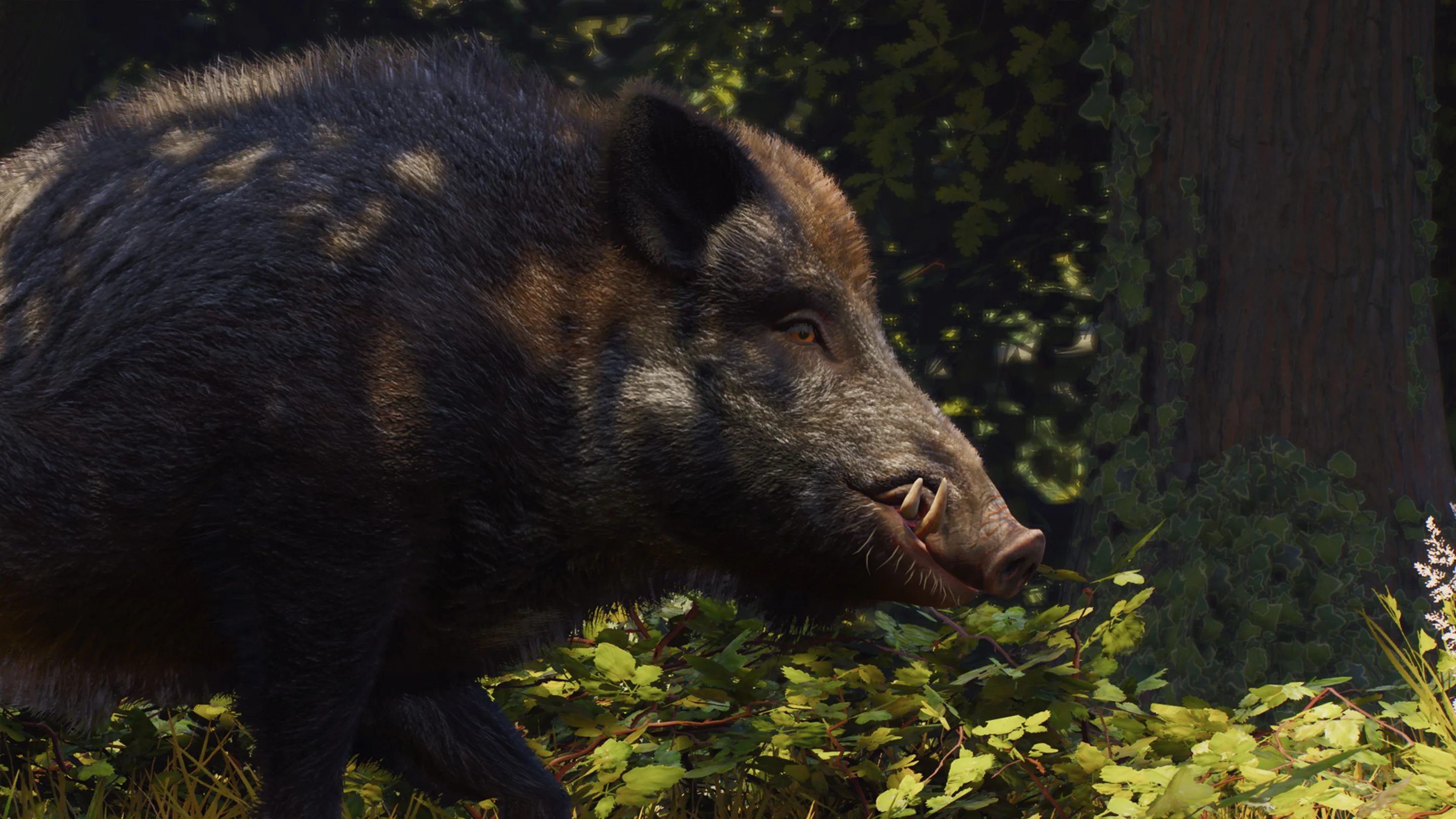
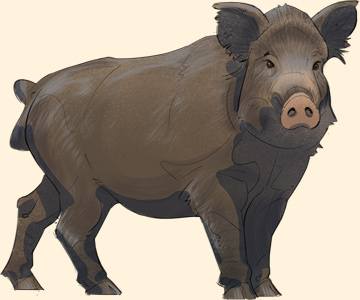
There are 16 recognised subspecies of the wild boar, varying in appearance. Their coat is made up of dark brown, coarse bristles, which form into a mane on the male’s neck. Wild boars have a large head which reaches up to a third of their body length, and, together with their powerful neck muscles, makes them adept at digging even into frozen ground.
Males are larger and heavier, reaching a size of 85cm to 100cm tall at the shoulder and 1.45m to 1.75m long, with a weight of 75kg to 130kg. Females grow to be 75cm to 90cm tall at the shoulder, 1.3m to 1.57m in length, and weigh between 60kg and 90kg.
Sounders led by dominant matriarch, male dominance based on size
Guests Can Walk Through
false
Female wild boars live in sounders led by an old matriarch, consisting of non-breeding females and mothers with their offspring. Adult males are solitary for most of the year, joining sounders only during the breeding season. Young and sub adult males live in bachelor groups.
Enrichments
Food-Based Enrichments
Dog Ball
Suspended Veggie Feeder
Forage Box
Melon Feeder
Barrel Feeder - Small
Habitat Enrichments
Cardboard Box
Herb Scent Marker
Mud Bath
Rubbing Pad Bark
Rubbing Pad
Small Ball
Small Ice Ball
Rubber Duck
Sprinkler
Conservation Topics
Forest Ecosystem Ambience
Crepuscular Behavior
Habitat Loss
Poaching and the Exotic Pet Trade
Omnivore Diet
Mammal Evolution
Wild Boar Fact Sheet
Vocal Animals
The Animal Kingdom Talk
Invasive Species
Wild Boar Name Plate
Lifecycle
Female wild boars live in sounders led by an old matriarch, consisting of non-breeding females and mothers with their offspring. Adult males are solitary for most of the year, joining sounders only during the breeding season. Young and sub adult males live in bachelor groups.
The breeding season in wild boars lasts from November to January. A male who has located a sounder of females will chase off young and infertile sows and herd any females in oestrus. Any rival male interfering with this chase is fought aggressively. If he is successful with herding the group, he mates with any fertile females before leaving the sounder.
Sows are pregnant for 108 to 120 days. Towards the end of the pregnancy, a sow constructs a nest made of grass, giving birth to an average of 4 to 6 piglets, although litters of up to 12 have been recorded. She remains in the nest for 10 days, allowing her offspring to suckle. Upon leaving the nest, the piglets remain close to their mother in the sounder.
Male piglets between 8 and 15 months old leave to form bachelor groups with other young males, while female piglets either remain with their natal sounder, or split off to establish a new group. Wild boars reach sexual maturity at 1 year old, though females are unlikely to reproduce until 18 months old, and males successfully reproduce around 4 years old when they are strong enough to chase and defend a sounder. Both female and male wild boars keep growing until they are 5 to 6 years old.
Colourmorphs
Leucistic
Statistics
Litter Size
2-5
Gestation / Incubation Period
3 months
Interbirth Period
8 months
Reproduction Difficulty
Easy
Age Of Sexual Sterility
12 years
Age Of Sexual Maturity
1 years
Juvenile1 years
Adult11 years
Elderly15 years
Animal Facts
If a wild boar mother dies before her piglets are mature, her offspring is adopted by other sows of her sounder.
Wild boars can smell edible roots and tubers buried in 25cm of soil.
Wild boar hair used to be used for toothbrush bristles.
The wild boar’s main predator is the grey wolf.
The wild boar has poor eyesight but compensates with its excellent sense of smell and hearing.
Conservation
Wild boars are a species of Least Concern, being extremely widespread and populous. Due to overhunting, they became extinct in Great Britain in the High Middle Ages but were reintroduced in the 1980s. Wild boars have established invasive populations in North America and South America, after groups were imported for hunting and breeding, with both intentional releases and escapes, hybridising with domestic pigs. In its native range, the wild boar is hunted for meat and represent a keystone of their habitat’s ecosystems.
Wild boars help manage woodlands. As omnivorous foragers, wild boars shape habitats by dispersing seeds and aerating soil, benefitting plant growth and other wildlife. Habitat protection, sustainable hunting regulations, and wildlife corridors help ensure healthy populations while mitigating human-wildlife conflicts. However, in the Americas, invasive populations are managed to protect native wildlife.
The wild boar’s return has sparked debate, posing risks to farmland, livestock and other wildlife through damage and disease transmission.
Native Range
Europe, Asia, Africa
Statistics
Wild Population
Unknown
Conservation Status
Least Concern
Valid Reserves
Scottish Highlands
Sweden Reserve
Poland Reserve
Valid Release Group Types
Mixed Group
Female Bachelor Herd
Solitary Male
Are you ready to run a zoo?
Prove your knowledge and create a personalised certificate endorsed by the Fauna & Ecosystems Network for the Wild Boar.
Planet Zoo 2 is in active development and the Zoopedia reflects this work in progress. Text, images, stats etc. are not necessarily final and may change or be expanded upon.




 Dog Ball
 Suspended Veggie Feeder
 Forage Box
 Melon Feeder
 Barrel Feeder - Small
 Cardboard Box
 Herb Scent Marker
 Mud Bath
 Rubbing Pad Bark
 Rubbing Pad
 Small Ball
 Small Ice Ball
 Rubber Duck
 Sprinkler