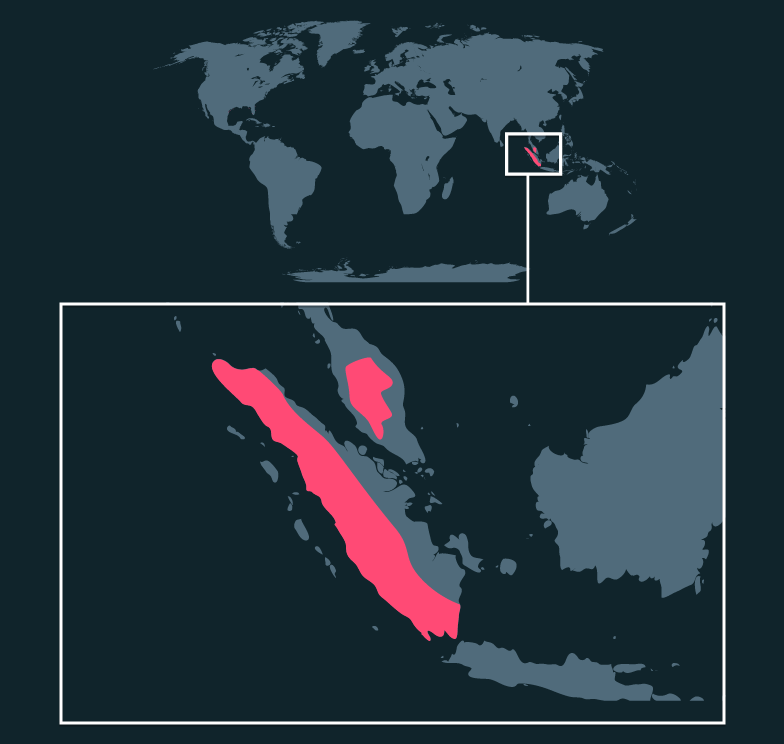
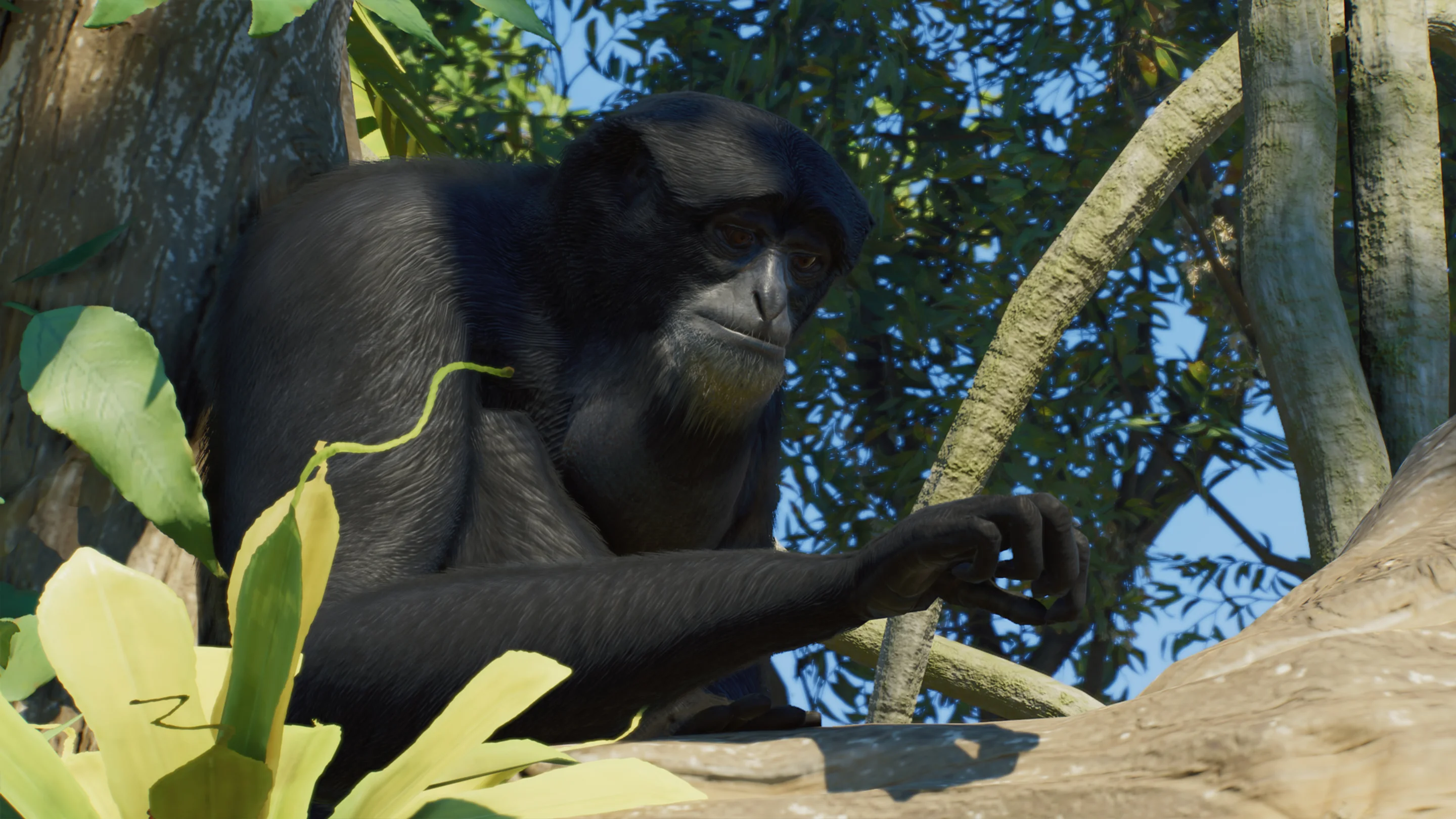
The siamang (or Symphalangus syndactylus) is a species of gibbon living in the rainforests of the Malay Peninsula and Indonesian island of Sumatra.
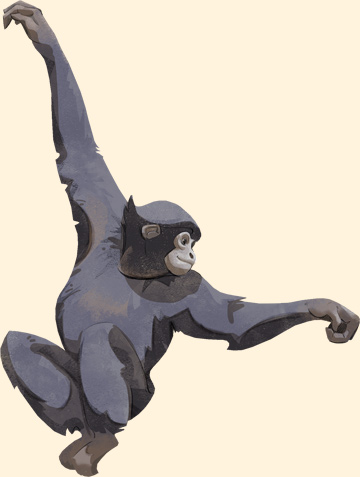
Their body is covered in all-black shaggy fur, which is thinner and grey on their faces. Siamangs have very long arms - their arm span approximately measuring twice their body length, short and sturdy legs and no tail. One of their most prominent features is the throat sac under their chin, which inflates during their distinctive vocalisations.
Typically, siamangs are 75cm to 100cm tall and weigh between 10kg and 13kg. Like other lesser apes, this species exhibits little to no sexual dimorphism.
Siamangs live in family groups made up of a monogamous breeding pair with their immature offspring, usually 2 to 3 juveniles. They are very social animals and generally do not live alone.
Enrichments
Food-Based Enrichments
Fruit Spike Tree
Veggie Jelly Cake
Melon Feeder
Fixed Roller Feeder - Small
Tool Puzzle Feeder
Habitat Enrichments
Bobbin
Bobbin Drum
Curio Ball
Small Ball
Rubber Duck
Musical Keyboard
Small Ice Ball
Conservation Topics
Rainforest Ecosystem Ambience
Diurnal Behavior
Deforestation
Habitat Loss
Poaching and the Exotic Pet Trade
Herbivore Diet
Mammal Evolution
Siamang Fact Sheet
Jumping Animals
The Animal Kingdom Talk
Siamang Name Plate
Lifecycle
Siamangs live in family groups made up of a monogamous breeding pair with their immature offspring, usually 2 to 3 juveniles. They are very social animals and generally do not live alone.
Young, single siamangs vocalise to attract a mate. When a male and female siamang meet, they will share each other’s company and food, and if compatible, will begin bonding by grooming each other and singing ‘duets’. They may begin copulating often, from which point on the couple will remain together for life. Mating can occur year-round, but peaks from May to July.
Pregnancies last around 8 months, and the female will give birth to a single infant. She will carry it around exclusively for the first 3 months of its life, then less and less. The juvenile begins consuming solid food at 6 months of age, and will be fully weaned at 1 year old. Around this time, the father will become the primary carer, teaching the infant how to traverse the trees, forage, and interact with other siamangs. At around 3 years of age, the juvenile does not require much assistance from its parents anymore, and the mother will usually give birth to a newborn once her first child is 3 years old. Older siblings often aid the father with raising infants.
Siamangs leave their family group at around 6 to 8 years old in order to found their own families, reaching sexual maturity at 8 or 9 years old.
Statistics
Litter Size
1-1
Gestation / Incubation Period
8 months
Interbirth Period
28 months
Reproduction Difficulty
Easy
Age Of Sexual Sterility
40 years
Age Of Sexual Maturity
8 years
Juvenile8 years
Adult32 years
Elderly10 years
Animal Facts
Siamang monogamous pairs will often sing together for several minutes to mark and defend their territory and bond with each other.
The Siamang is the largest species of gibbon.
Siamangs play an important role in their native ecosystems, as frugivores they aid forest regeneration by spreading seeds via defecation.
Two toes on the siamang’s feet are connected by membrane, a feature unique to the siamang within the gibbon family.
Siamang families develop very close bonds; parents mate for life and the whole group travels together.
Conservation
Siamangs are Endangered due to the great decrease in population numbers over the last decades. Deforestation and agricultural land conversion is the main threat to their survival, as their habitat is destroyed to often create palm oil plantations or illegal logging operations. This fragments and isolates populations, making it difficult for them to find mates. They are also under pressure from the illegal pet trade, where poachers will kill mothers to have easier access to their infants to sell them.
The siamang is a protected species, and several areas throughout their native range have been designated as conservation zones to safeguard the remaining populations of not only the siamang, but also other gibbons. Some organisations have launched successful rescue and reintroduction programs into safe, monitored areas. International and local efforts are also focused on educating communities, enforcing wildlife protection laws, and promoting sustainable land-use practices to limit deforestation.
Native Range
Southeast Asia
Statistics
Wild Population
100,000 (estimated)
Conservation Status
Endangered
Valid Reserves
Sumatra Reserve
Valid Release Group Types
Mixed Group
Breeding Partners
Are you ready to run a zoo?
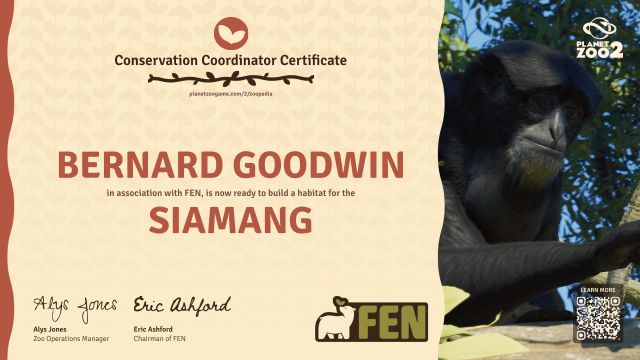
Prove your knowledge and create a personalised certificate endorsed by the Fauna & Ecosystems Network for the Siamang.
Planet Zoo 2 is in active development and the Zoopedia reflects this work in progress. Text, images, stats etc. are not necessarily final and may change or be expanded upon.



 Fruit Spike Tree
 Veggie Jelly Cake
 Melon Feeder
 Fixed Roller Feeder - Small
 Tool Puzzle Feeder
 Bobbin
 Bobbin Drum
 Curio Ball
 Small Ball
 Rubber Duck
 Musical Keyboard
 Small Ice Ball