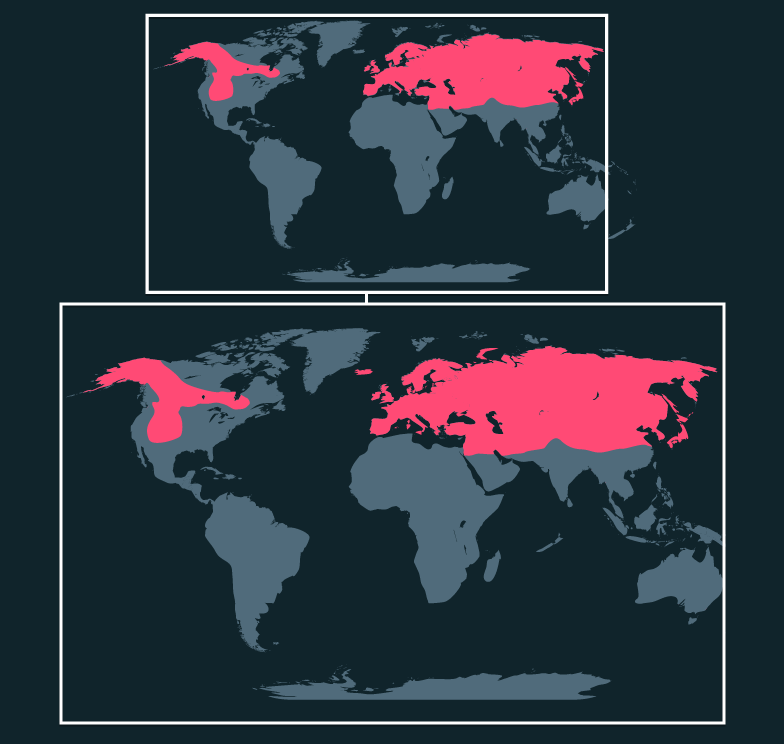
The Old World swallowtail (or Papilio machaon) is a butterfly living in the temperate regions, woodlands and even tundras of Europe, Asia and North America.
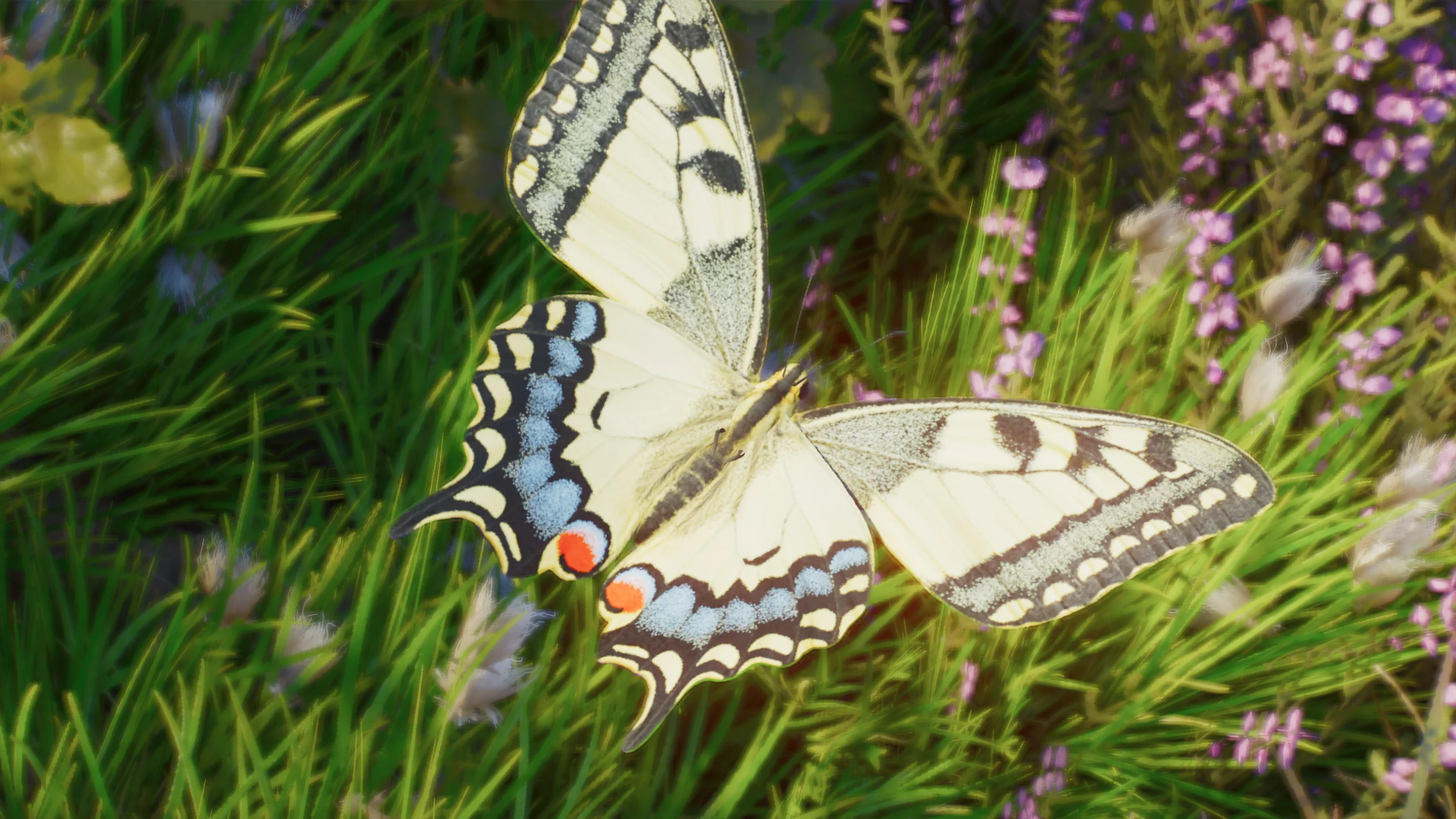
It has pale yellow wings with grey-black patterning on the forewings, and blue-black accents as well as red eyespots on the hindwings. The hindwings also have an extended ‘tail’, for which they are named swallowtail. The caterpillar is plump and pale green with black and orange markings on each body segment. The chrysalises vary in color from green to brown with lighter camouflage markings.
There is no sexual dimorphism in size and appearance in the Old World swallowtail, and its average wingspan is 6.5cm to 8.6cm.
Like most butterflies, the Old World swallowtail has no social needs outside of mating or competing for mates, but equally does tolerate conspecifics in its vicinity given access to enough resources.
Enrichments
Conservation Topics
Diurnal Behavior
Nectarivore Diet
Insect Evolution
Old World Swallowtail Fact Sheet
The Arthropod World Talk
Climate Change
Food Scarcity
Bee Population Decline
Grassland Ecosystem Ambience
Old World Swallowtail Name Plate
Lifecycle
Like most butterflies, the Old World swallowtail has no social needs outside of mating or competing for mates, but equally does tolerate conspecifics in its vicinity given access to enough resources.
Mating season occurs mid-summer between June and July. Old World swallowtail males engage in ‘hilltopping’ mating behavior, attempting to defend a territory at the highest point of a hill. Males that maintain a territory at a high elevation are more likely to mate, as females will also fly to the highest points of terrain to mate. When a female selects a mate, she and the male will cling to the stem of a plant, face away from each other, and connect the tips of their abdomens.
Soon after mating, she lays her eggs one by one, one per leaf. In total, she may lay 200 to 430 eggs within 4 days. 4 to 10 days after laying, the caterpillars hatch from the eggs. They feed on the soft, young leaves of food plants like carrots and fennel for 3 to 4 weeks and then spin a chrysalis.
After pupating in the chrysalis for a period of 10 to 20 days, they emerge as adult butterflies. However, if they pupated towards the end of summer, they may remain in the chrysalis until the following year, when temperatures rise again. Depending on the time of year, hatched adults either hibernate or immediately look for a mate. Old World swallowtails die a week or two after mating, so those who hibernate before may live for roughly 9 months.
Statistics
Gestation / Incubation Period
1 months
Interbirth Period
10 months
Reproduction Difficulty
Easy
Age Of Sexual Sterility
Death
Age Of Sexual Maturity
0 years
Adult0.5 years
Elderly1 years
Animal Facts
The Old World swallowtail is the largest species of butterfly found in the UK.
The Old World swallowtail caterpillar has an orange organ, called an osmeterium, on its head which protrudes and produces foul odors when threatened to scare off predators.
The Old World swallowtail caterpillar is parasitized by a wasp species called Trogus lapidator that lays its eggs inside the body cavity of the caterpillar and feeds on it while it pupates, with the adult wasp emerging from the chrysalis.
The tongue of the Old World swallowtail is adapted to feed on flowers with many small, thin, tubular petals such as dandelions.
The Old World swallowtail is a fast, direct flier in comparison to many other species of butterflies.
Conservation
The Old World swallowtail is considered a species of Least Concern, although populations are becoming scarcer in some regions. It is affected by loss of habitat, water pollution and climate change. All butterflies are collected to some extent, but there is no trade information of concern for this species.
This species regularly occurs in protected areas across its range. Local declines should be addressed by protecting important habitats, especially wet fenland breeding sites, and monitoring population levels over time.
The long-term outlook for the Old World swallowtail is positive, and its overall population is considered to be increasing.
Native Range
Europe, Asia, North America
Statistics
Wild Population
Unknown
Conservation Status
Least Concern
Are you ready to run a zoo?
Prove your knowledge and create a personalised certificate endorsed by the Fauna & Ecosystems Network for the Old World Swallowtail.
Planet Zoo 2 is in active development and the Zoopedia reflects this work in progress. Text, images, stats etc. are not necessarily final and may change or be expanded upon.