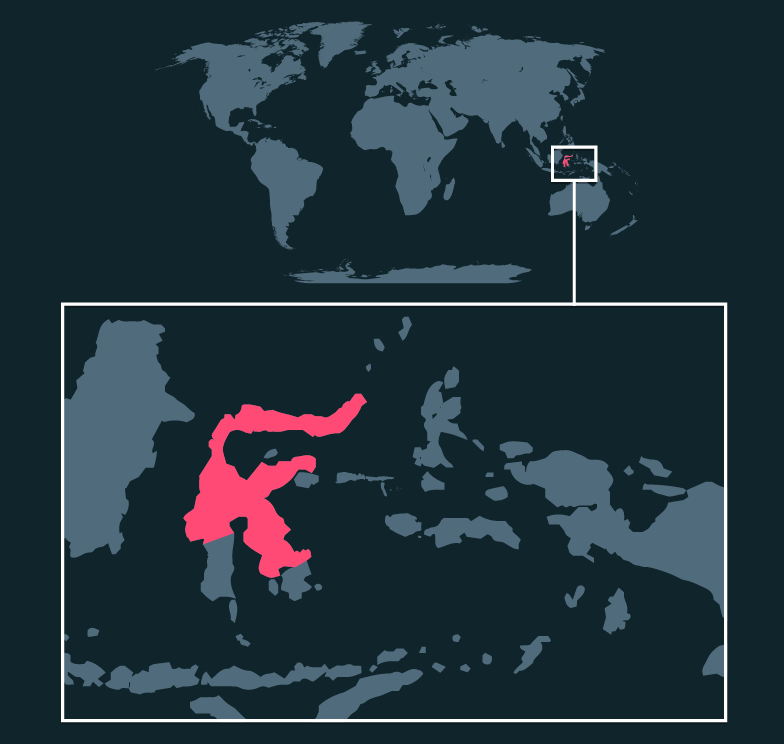
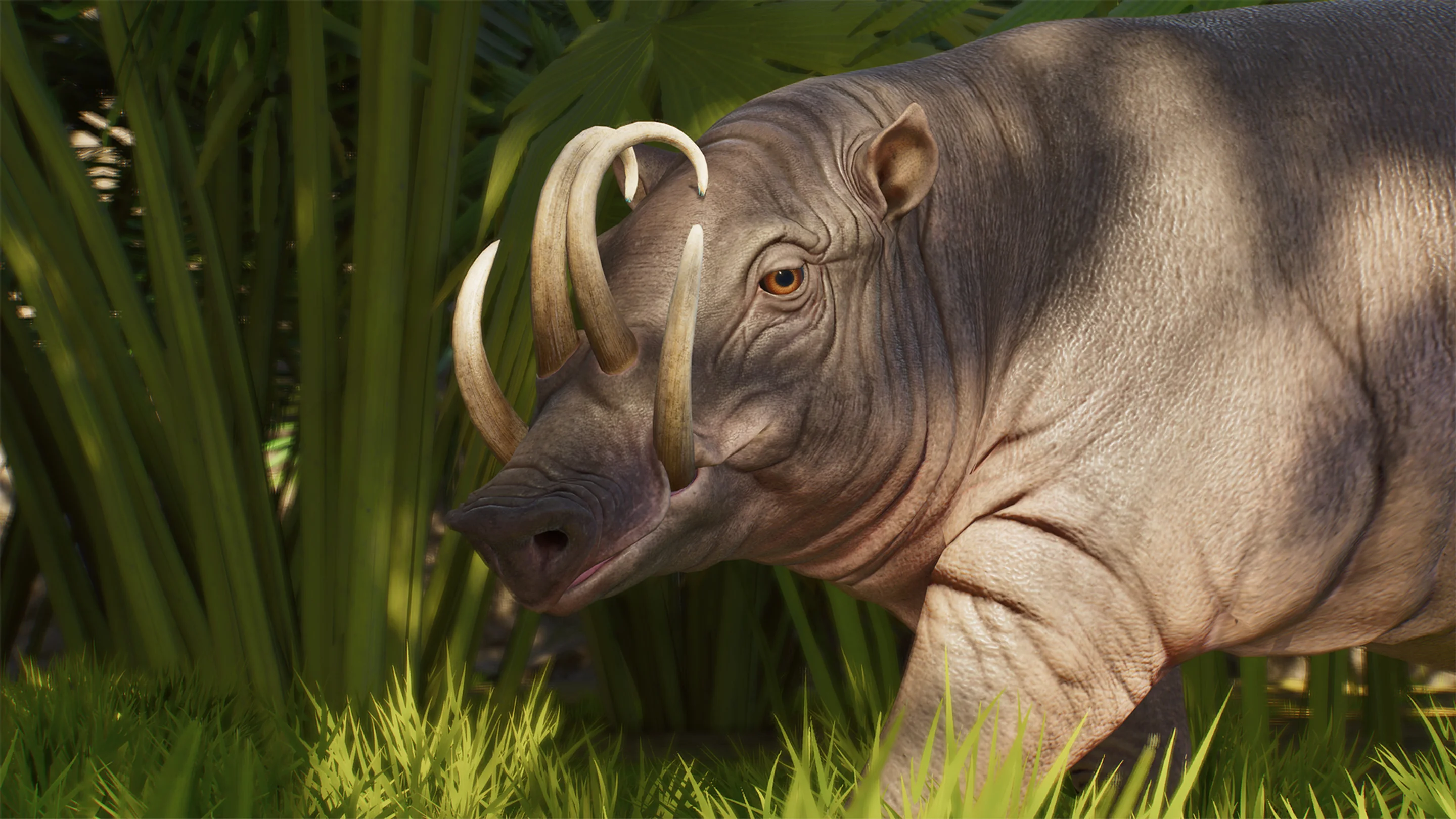
The North Sulawesi babirusa (or Babyrousa celebensis) is a species of pig native to the Sulawesi island of Indonesia and several small surrounding islands.
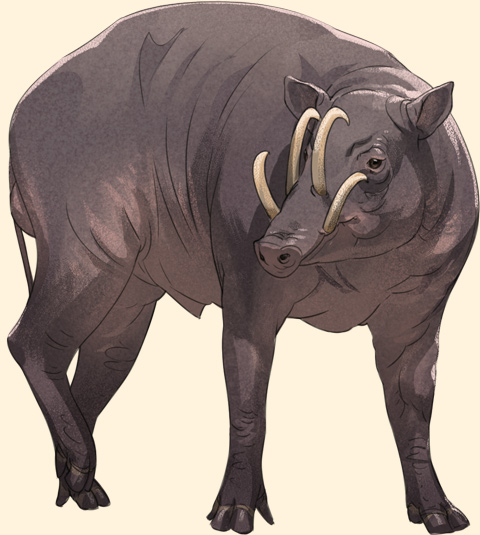
Its body is mostly hairless with grey skin.
The species has a head-body length of 85cm to 110cm, a tail length of 29cm to 32cm and a shoulder height of 58cm to 66cm. Male babirusas weigh between 70kg and 100kg and have four large tusks that curl back towards their skull. Female babirusas weigh between 45kg and 80kg.
Males fight for right to mate. Females have rank in groups based on age.
Guests Can Walk Through
false
Babirusa females tend to live in small groups made up of sisters and their offspring under two years old. Mature males live alone but will come alongside female groups in the mating season.
Enrichments
Food-Based Enrichments
Dog Ball
Suspended Veggie Feeder
Forage Box
Melon Feeder
Barrel Feeder - Small
Habitat Enrichments
Cardboard Box
Herb Scent Marker
Sprinkler
Small Ball
Rubbing Pad
Rubbing Pad Bark
Small Ice Ball
Mud Bath
Conservation Topics
Rainforest Ecosystem Ambience
Diurnal Behavior
Habitat Loss
Poaching and the Exotic Pet Trade
Omnivore Diet
Mammal Evolution
North Sulawesi Babirusa Fact Sheet
Vocal Animals
The Animal Kingdom Talk
North Sulawesi Babirusa Name Plate
Lifecycle
Babirusa females tend to live in small groups made up of sisters and their offspring under two years old. Mature males live alone but will come alongside female groups in the mating season.
Breeding season is year-round, but peaks around June and July. When the females are in oestrus, males will track them from the scent of their urine and follow them once located. If two males locate the same female, they may engage in a dominance display to win the rights to mate. They will vocalise, charge at each other and, if neither concedes, fight by standing on their hind legs and ‘boxing‘ with their front legs. Usually the larger male with the longer teeth will win.
After a pregnancy of 150 to 164 days, the female will give birth to 1 to 2 piglets. Piglets can eat solid food from 3 to 10 days after birth and will be fully weaned by 6 to 8 months old, or earlier if their mother falls pregnant again.
Males leave their mother’s group at 1 year old and will become solitary. Females may remain with their mother’s group or leave to start their own natal group. Both sexes will be sexually mature after 1 to 2 years.
Statistics
Litter Size
1-2
Gestation / Incubation Period
5 months
Interbirth Period
6 months
Reproduction Difficulty
Easy
Age Of Sexual Sterility
death
Age Of Sexual Maturity
2 years
Juvenile2 years
Adult9 years
Elderly13 years
Animal Facts
‘Babirusa’ means ‘pig deer’ in Malay.
Babirusas have a two chambered stomach, more like that of sheep than of other pigs.
The male babirusas tusks continue to grow throughout his life and can even grow into the skull.
Babirusas are missing a bone in the snout that other pigs have, so they do not engage in ‘rooting’ behaviour typical of pigs.
Babirusas are excellent swimmers; it is thought that they are found across various Indonesian islands because they swam to them.
Conservation
The North Sulawesi babirusa is a Vulnerable species, undergoing significant regional population declines due to habitat loss, hunting pressure, and limited range. Babirusas are forest specialists and struggle to survive in heavily altered landscapes. Expanding agriculture, logging, and human settlement fragment forests the babirusa depends on, reducing food availability and safe breeding areas. They are intensively hunted for bushmeat and their unique tusks, which hold cultural and ornamental value.
Protected areas are critical refuges for remaining populations, where enforcement against poaching is improving. Education aims to reduce hunting by highlighting the babirusa’s ecological and cultural importance, and support alternative livelihoods to reduce reliance on bushmeat. Captive breeding programs, both within Indonesia and internationally, provide an additional safeguard against extinction and potential for reintroduction if wild populations continue to decline.
Together, these efforts protect the babirusa and preserve the broader ecosystems of Sulawesi, home to many endemic and endangered species.
Native Range
Asia
Statistics
Wild Population
Under 10,000
Conservation Status
Vulnerable
Valid Reserves
Sumatra Reserve
Valid Release Group Types
Female Bachelor Herd
Solitary Male
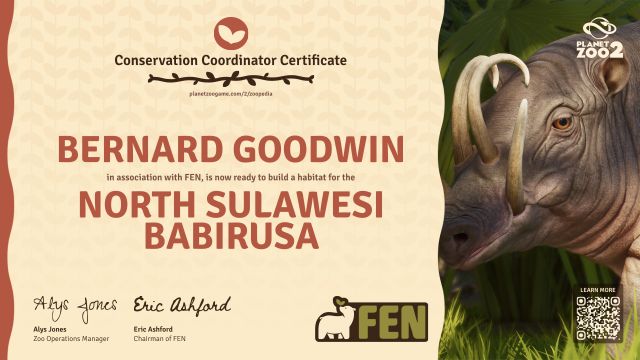
Are you ready to run a zoo?
Prove your knowledge and create a personalised certificate endorsed by the Fauna & Ecosystems Network for the North Sulawesi Babirusa.
Planet Zoo 2 is in active development and the Zoopedia reflects this work in progress. Text, images, stats etc. are not necessarily final and may change or be expanded upon.



 Dog Ball
 Suspended Veggie Feeder
 Forage Box
 Melon Feeder
 Barrel Feeder - Small
 Cardboard Box
 Herb Scent Marker
 Sprinkler
 Small Ball
 Rubbing Pad
 Rubbing Pad Bark
 Small Ice Ball
 Mud Bath