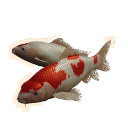
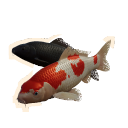
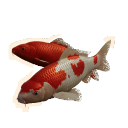
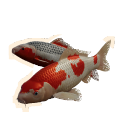
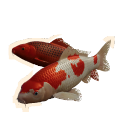
The koi is a domesticated and selectively bred form of carp, with ancestor species likely including the Eurasian carp (or Cyprinus carpio) and the Amur carp (or Cyprinus rubrofuscus). Wild carp inhabit slow-moving rivers, lakes, floodplains and ponds with soft, muddy bottoms and abundant vegetation, their native range extending across the temperate regions of Eurasia. Koi have emerged in Japan and are now widely distributed around the world as ornamental fish.
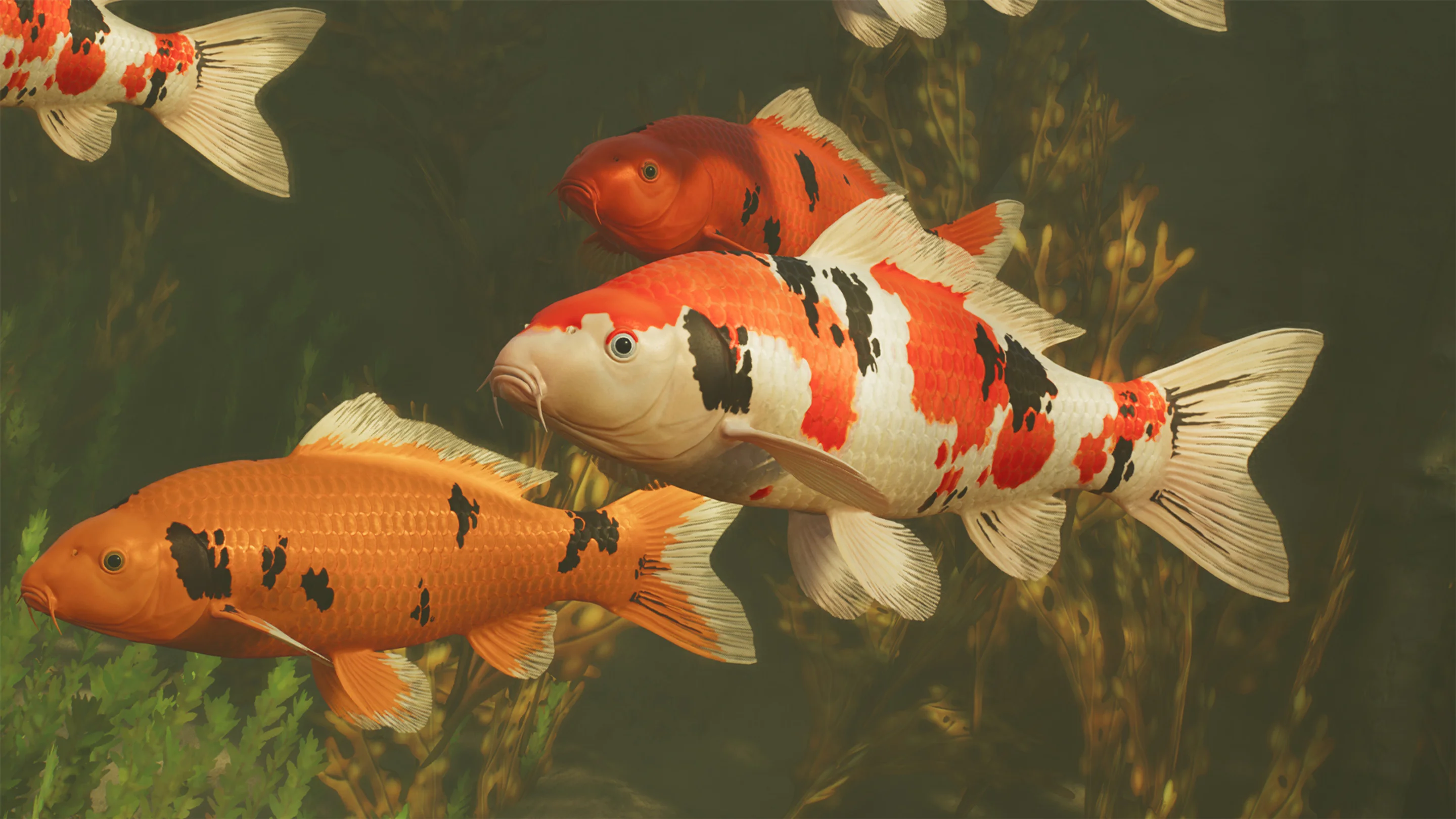
Koi are best known for their striking colors and patterns ranging from white, red, orange, yellow and black, while wild carp species are usually olive-brown, greenish or yellowish with a paler underside and sometimes reddish fins. All carp have elongated, robust bodies with large scales, and distinctive barbels at the corners of the mouth.
Adult koi and common carp typically reach standard lengths of 60cm to 90cm and weigh between 6kg and 15kg, though some exceptional individuals can exceed lengths of 1m and weights upwards of 30kg. Females tend to be larger and heavier than males on average.
Koi are social fish that thrive in groups and should not be kept alone.
Enrichments
Food-Based Enrichments
Aquatic Feeder - Flakes
Conservation Topics
Freshwater Ecosystem Ambience
Cathemeral Behavior
Omnivore Diet
Ray-finned Fish Evolution
Koi Fact Sheet
Swimming Animals
Underwater Life Talk
Domestication
Koi Name Plate
Lifecycle
Koi are social fish that thrive in groups and should not be kept alone.
Koi, like wild carp, mate in spring and early summer when rising water temperatures and longer daylight hours stimulate courtship behaviors Males actively chase and nudge females around shallow, plant-rich areas, which encourages them to release their eggs. Simultaneously, males release milt (the seminal fluid of fish) into the water for external fertilization in a process called broadcast spawning. Eggs scatter and adhere to aquatic plants, roots or rocks and will not be guarded by the adults.
Following fertilization, the eggs hatch within three to seven days, depending on water temperature. Newly hatched larvae initially rely on their yolk sacs for nourishment before developing into free-swimming fry that begin feeding on microscopic organisms. As they grow over the next several months, juvenile koi gradually adopt an omnivorous diet and develop their characteristic body shape and coloration.
In suitable conditions, koi grow relatively quickly and typically reach sexual maturity between 2 and 4 years old. With proper care, they can live for several decades.
Colourmorphs
Tanchō
Karasu
Orenji Ogon
Asagi
Aka Matsuba
Bekkō
Statistics
Gestation / Incubation Period
0 months
Interbirth Period
11 months
Reproduction Difficulty
Easy
Age Of Sexual Sterility
death
Age Of Sexual Maturity
3 years
Juvenile3 years
Adult17 years
Elderly40 years
Animal Facts
The colors of a koi may change over time depending on diet, environment, season and age.
Koi can learn to recognize people and will swim towards those who regularly feed them and interact with them.
Wild carps were farmed for food hundreds or years ago in East Asia; farmers noted striking color mutations occurring occasionally.
Koi can live for very long periods if well looked after, some records claim ages of over 100 years for a particular variant of koi.
'Koi' simply means 'carp' in Japanese, while the more specific term 'nishikigoi' means 'brocaded carp'.
Conservation
Koi are domesticated and widely distributed. However, their wild ancestors face various conservation issues. Both Eurasian and Amur carp are of Least Concern, but their native freshwater habitats are threatened by degradation due to river regulation, dam construction, pollution and wetland drainage in many places. This reduces available spawning and feeding grounds. Paradoxically, the Eurasian carp is also one of the 100 worst invasive species worldwide - it has been introduced to every continent except Antarctica, and their bottom-feeding behaviors and strong appetite damage native aquatic vegetation and outcompete native fish.
There are efforts to mitigate both challenges. In native carp habitats, measures include wetland restoration, improvement of water quality and regulation, and limiting fishing pressure to protect spawning grounds. In areas with invasive carp, population control via monitoring, removal programs and public education to prevent releases of ornamental fish are in place.
Together, both strategies aim to protect habitats and species in their respective native environments.
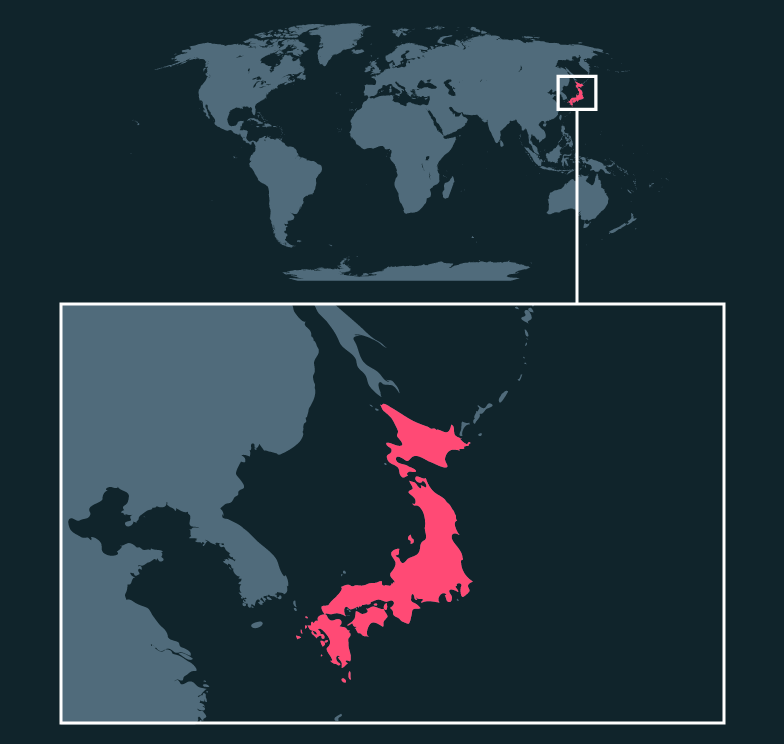
Native Range
Distributed worldwide
Statistics
Wild Population
N/A
Conservation Status
Domesticated
Are you ready to run a zoo?
Prove your knowledge and create a personalised certificate endorsed by the Fauna & Ecosystems Network for the Koi.
Planet Zoo 2 is in active development and the Zoopedia reflects this work in progress. Text, images, stats etc. are not necessarily final and may change or be expanded upon.



 Aquatic Feeder - Flakes