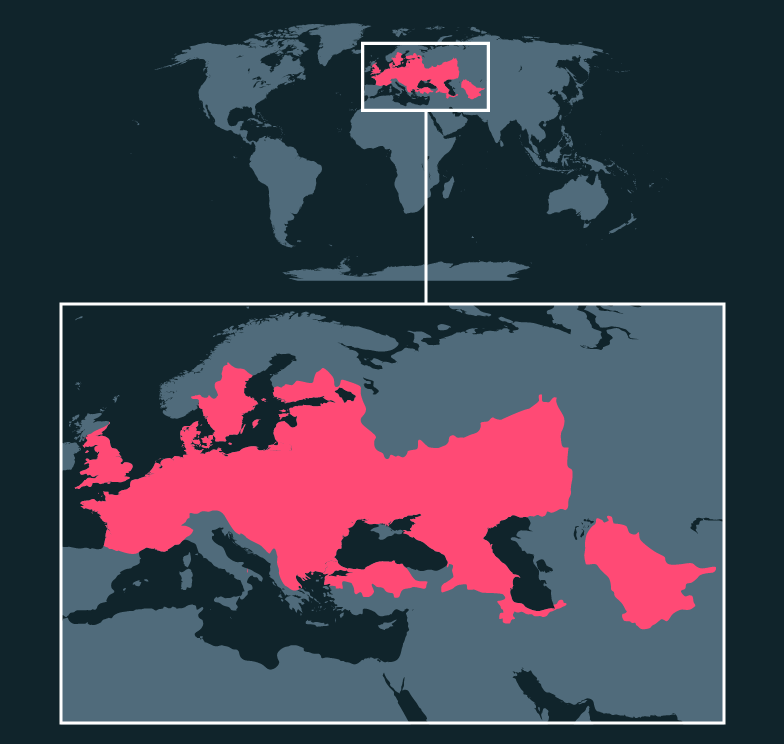
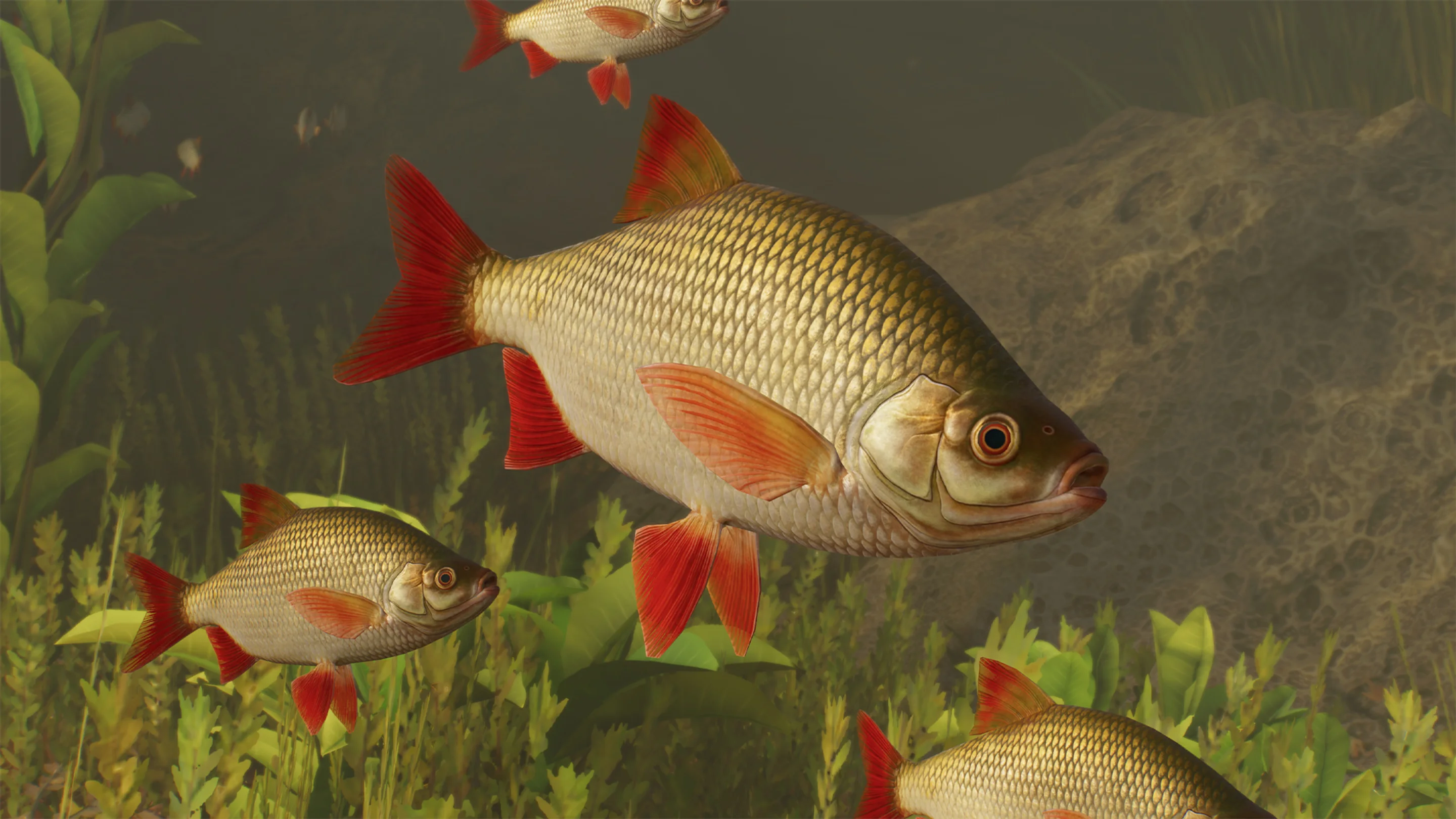
The common rudd (or Scardinius erythrophthalmus) is a widespread freshwater fish native to much of Europe and western Asia, though it has also been introduced to North America, New Zealand, and parts of Africa. It typically inhabits slow-moving rivers, lakes, ponds, and canals with abundant vegetation, preferring still or gently flowing waters where it can feed on plants and small invertebrates.
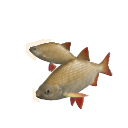
The rudd is a medium-sized, laterally compressed fish with a deep, golden-green body, reddish fins, and a distinct upturned mouth.
Adults measure 8in to 14in in length and weigh 7oz to 14oz.
Rudd typically live in shoals (groups), especially when young, which provides protection from predators and improves foraging efficiency. Individuals coordinate movement, often feeding near the surface together on insects or among aquatic plants. As they grow older and larger, rudd may still remain in groups, but the shoals often become smaller and looser, with some larger adults living more solitarily, especially in less densely populated waters.
Enrichments
Food-Based Enrichments
Aquatic Feeder - Flakes
Conservation Topics
Freshwater Ecosystem Ambience
Crepuscular Behavior
Omnivore Diet
Ray-finned Fish Evolution
Common Rudd Fact Sheet
Swimming Animals
Underwater Life Talk
Invasive Species
Common Rudd Name Plate
Lifecycle
Rudd typically live in shoals (groups), especially when young, which provides protection from predators and improves foraging efficiency. Individuals coordinate movement, often feeding near the surface together on insects or among aquatic plants. As they grow older and larger, rudd may still remain in groups, but the shoals often become smaller and looser, with some larger adults living more solitarily, especially in less densely populated waters.
The common rudd has a reproductive cycle strongly tied to seasonal changes, particularly rising water temperatures in late spring and early summer. When temperatures reach around 64 to 68°F, rudd begin their spawning season, typically between May and June in temperate regions. Courtship involves males becoming more active and vibrant in color, especially with intensified red in their fins, as they pursue females in shallow, vegetated areas. Males nudge and chase females to stimulate egg release. Spawning occurs communally in shoals, with multiple males often pursuing a single female. The female scatters adhesive eggs onto submerged vegetation or other surfaces, while males simultaneously release sperm to externally fertilize them.
The eggs hatch in about one to two weeks depending on water temperature. Newly hatched larvae remain attached to vegetation for a short period, absorbing their yolk sacs before beginning to feed on plankton.
Juvenile rudd grow quickly, forming tight shoals near vegetation for safety. Rudd generally reach sexual maturity at 2 to 3 years of age, although this varies with environmental conditions such as temperature and food availability.
Colourmorphs
Golden Morph
Statistics
Gestation / Incubation Period
0 months
Interbirth Period
11 months
Reproduction Difficulty
Easy
Age Of Sexual Sterility
death
Age Of Sexual Maturity
2 years
Juvenile2.5 years
Adult7.5 years
Elderly17 years
Animal Facts
The combination of hardiness, striking appearance, and adaptability has contributed to the common rudd’s success across a wide range of habitats.
Common rudd have a distinctive upturned mouth that lets them feed at or near the water surface, catching insects and plant matter.
Young common rudd feed more on zooplankton, aquatic insects, and small invertebrates; as they mature, they shift toward feeding heavily on aquatic vegetation and plants.
Mature common rudd may consume up to 40% of their body weight in vegetation daily.
Common rudd are known to hybridize with other cyprinids like roach, bream and chub.
Conservation
The common rudd is a species of Least Concern, and commonly an invasive species. In many regions, they outcompete native fish for habitat, food and spawning grounds. Their heavy grazing on aquatic vegetation significantly alters plant communities and habitat, where rudd thrive to the detriment of native fauna. Rudd can hybridize with species such as roach, bream, and bleak, threatening the genetic integrity of native populations.
Some regions ban the transport of live rudd or restrict their use as live bait, and anglers are discouraged from releasing them into new waters. Where rudd are already established, mechanical removal, netting, or targeted fishing aim to reduce population density. Monitoring and research programs track rudd population trends, detect hybrid zones, and assess ecological impacts. Risk assessment frameworks identify vulnerable waterbodies and priorities them for conservation action.
Together, these efforts aim to limit the spread of rudd, mitigate their ecological impacts, and protect the biodiversity of freshwater systems.
Native Range
Europe, Asia
Statistics
Wild Population
Unknown
Conservation Status
Least Concern
Valid Reserves
Scottish Highlands
Sweden Reserve
Poland Reserve
Valid Release Group Types
Mixed Group
Are you ready to run a zoo?
Prove your knowledge and create a personalised certificate endorsed by the Fauna & Ecosystems Network for the Common Rudd.
Planet Zoo 2 is in active development and the Zoopedia reflects this work in progress. Text, images, stats etc. are not necessarily final and may change or be expanded upon.



 Aquatic Feeder - Flakes