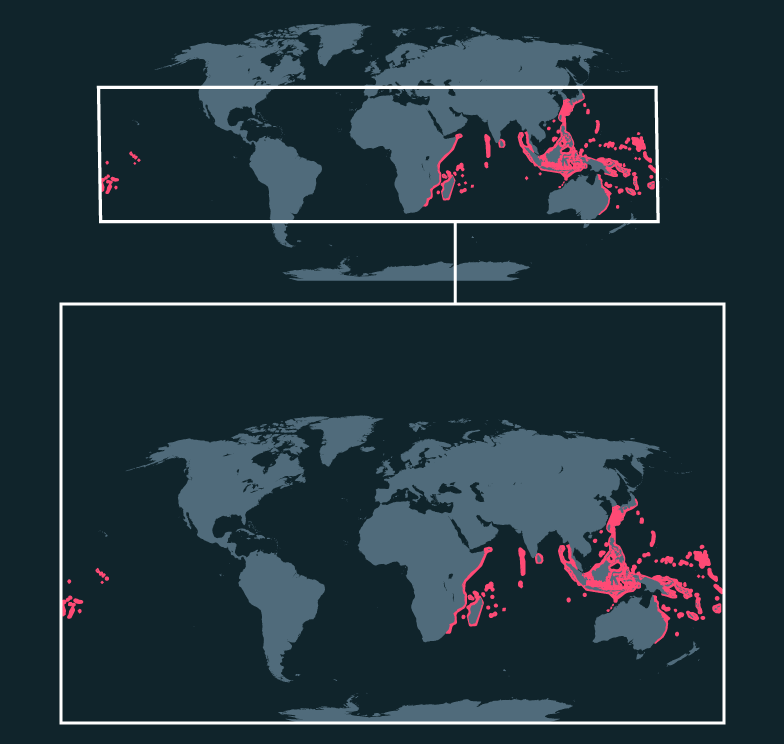
The clown triggerfish (or Balistoides conspicillum) inhabits clear tropical and subtropical coral reefs, lagoons, and reef slopes where it shelters in caves or crevices. It lives throughout the Indo-Pacific, from the eastern coast of Africa and the Red Sea across the Indian Ocean to the western and central Pacific, including Indonesia, Australia, and Micronesia.
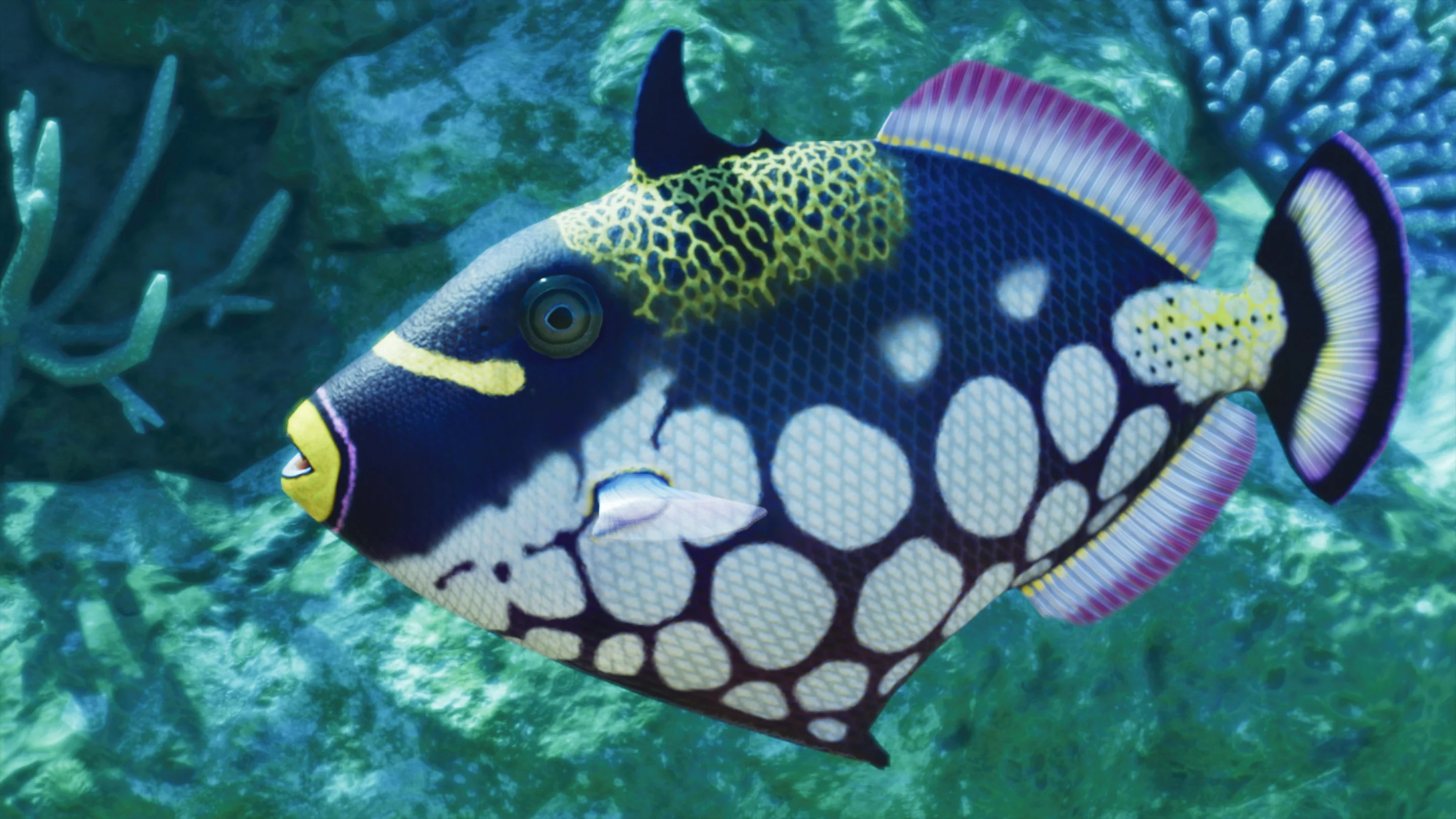
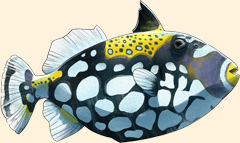
It has a black to brown body covered in large white spots, a yellow mouth, and a mask-like pattern around the eyes. Clown triggerfish are robust and laterally compressed.
Adults typically measure 30cm to 40cm in length and weigh 2kg to 4kg on average. Males are slightly larger and heavier than females, but otherwise the sexes look very similar in coloration and overall shape.
Clown triggerfish are not social fish. They are primarily solitary and territorial, especially as adults. Individuals usually occupy and defend a specific area of reef that contains shelter and feeding grounds.
Enrichments
Food-Based Enrichments
Suspended Bait
Habitat Enrichments
Submarine Buoy
Bubble Blower - Airstone
Conservation Topics
Reef Ecosystem Ambience
Diurnal Behavior
Climate Change
Habitat Loss
Poaching and the Exotic Pet Trade
Carnivore Diet
Ray-finned Fish Evolution
Clown Triggerfish Fact Sheet
Swimming Animals
Underwater Life Talk
Clown Triggerfish Name Plate
Lifecycle
Clown triggerfish are not social fish. They are primarily solitary and territorial, especially as adults. Individuals usually occupy and defend a specific area of reef that contains shelter and feeding grounds.
Breeding occurs year-round, but peaks in warmer seasons. During the breeding season, male clown triggerfish establish and defend territories on sandy areas near reefs, often containing multiple nesting sites. Courtship involves the male displaying to receptive females through body posturing, swimming displays, and leading them toward a prepared nesting area. Spawning occurs when a female deposits thousands of adhesive eggs into a shallow depression in the sand, after which the male fertilizes them externally.
Once spawning is complete, the female plays the primary role in reproduction by remaining at the nest to guard and aerate the eggs, while the male may continue defending the broader territory from intruders. Parental aggression during this period is intense, and nesting adults are well known for charging divers or large animals that come too close.
The eggs hatch after several days, releasing tiny planktonic larvae that drift in the open ocean. This pelagic larval stage can last several weeks, allowing for wide dispersal across the Indo-Pacific. As the juveniles settle onto reefs, they adopt a more benthic lifestyle and gradually develop the bold coloration characteristic of adults. Growth is slow, with individuals taking several years to reach sexual maturity.
Statistics
Litter Size
1-2
Gestation / Incubation Period
0 months
Interbirth Period
3 months
Reproduction Difficulty
Easy
Age Of Sexual Sterility
death
Age Of Sexual Maturity
4 years
Juvenile4 years
Adult4 years
Elderly12 years
Animal Facts
The clown triggerfish has extremely strong teeth adapted to crushing the shells of crustaceans, mollusks and sea urchins.
The clown triggerfish has a dorsal spine that can lock in an upright position, which it uses to anchor itself into crevices to avoid predators.
The clown triggerfish is extremely territorial and aggressive and is known to chase divers.
The clown triggerfish can blow strong water jets which can uncover food by flipping over pebbles and sand.
The distinctive appearance of the clown triggerfish makes it a sought after aquarium fish, but its aggressive nature makes it difficult to keep.
Conservation
The clown triggerfish is a species of Least Concern. Clown triggerfish rely on healthy reef structures for shelter, nesting sites, and feeding. Survival and reproductive success suffer as coral reefs degrade due to climate change, coral bleaching, ocean acidification, coastal development, and destructive fishing practices. It is collected for the aquarium trade due to its striking appearance, and localized overharvesting can occur. Their aggressive behavior and slow growth make populations slow to recover when numbers decline.
The clown triggerfish benefits from marine protected areas that restrict fishing and habitat destruction in key reef habitats. Broader initiatives improving reef resilience and sustainable coastal development indirectly support the species. Regulations on aquarium fish collection and responsible aquarium sourcing limit pressure on wild populations.
Ongoing reef monitoring, public education, and conservation research are essential to ensure that clown triggerfish populations remain stable as reef ecosystems continue to face global environmental stressors.
Native Range
Indo-Pacific reefs and coasts
Statistics
Wild Population
Unknown
Conservation Status
Least Concern
Valid Release Group Types
Solitary Male
Solitary Female
Breeding Partners
Are you ready to run a zoo?
Prove your knowledge and create a personalised certificate endorsed by the Fauna & Ecosystems Network for the Clown Triggerfish.
Planet Zoo 2 is in active development and the Zoopedia reflects this work in progress. Text, images, stats etc. are not necessarily final and may change or be expanded upon.






 Suspended Bait
 Submarine Buoy
 Bubble Blower - Airstone