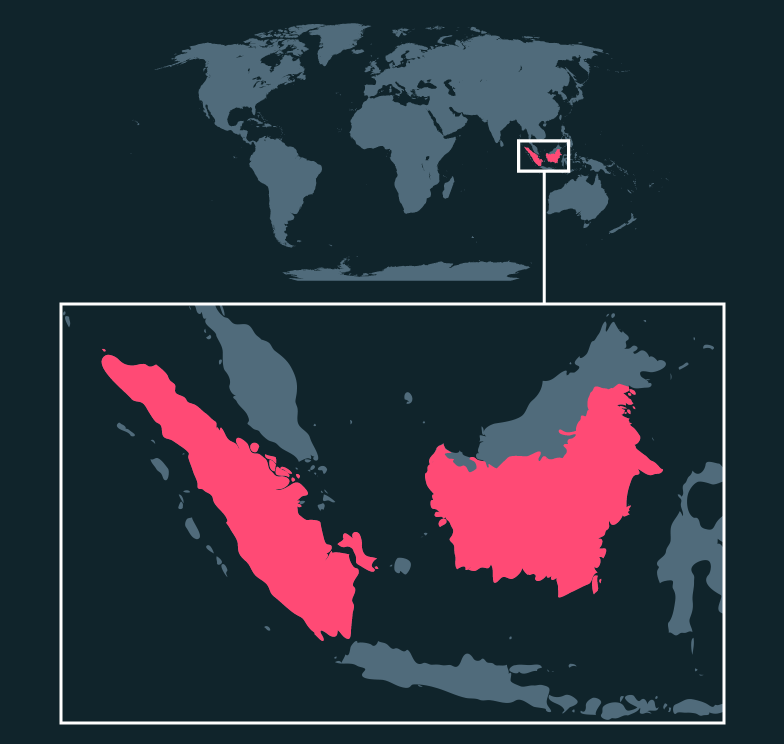
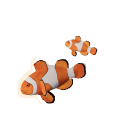
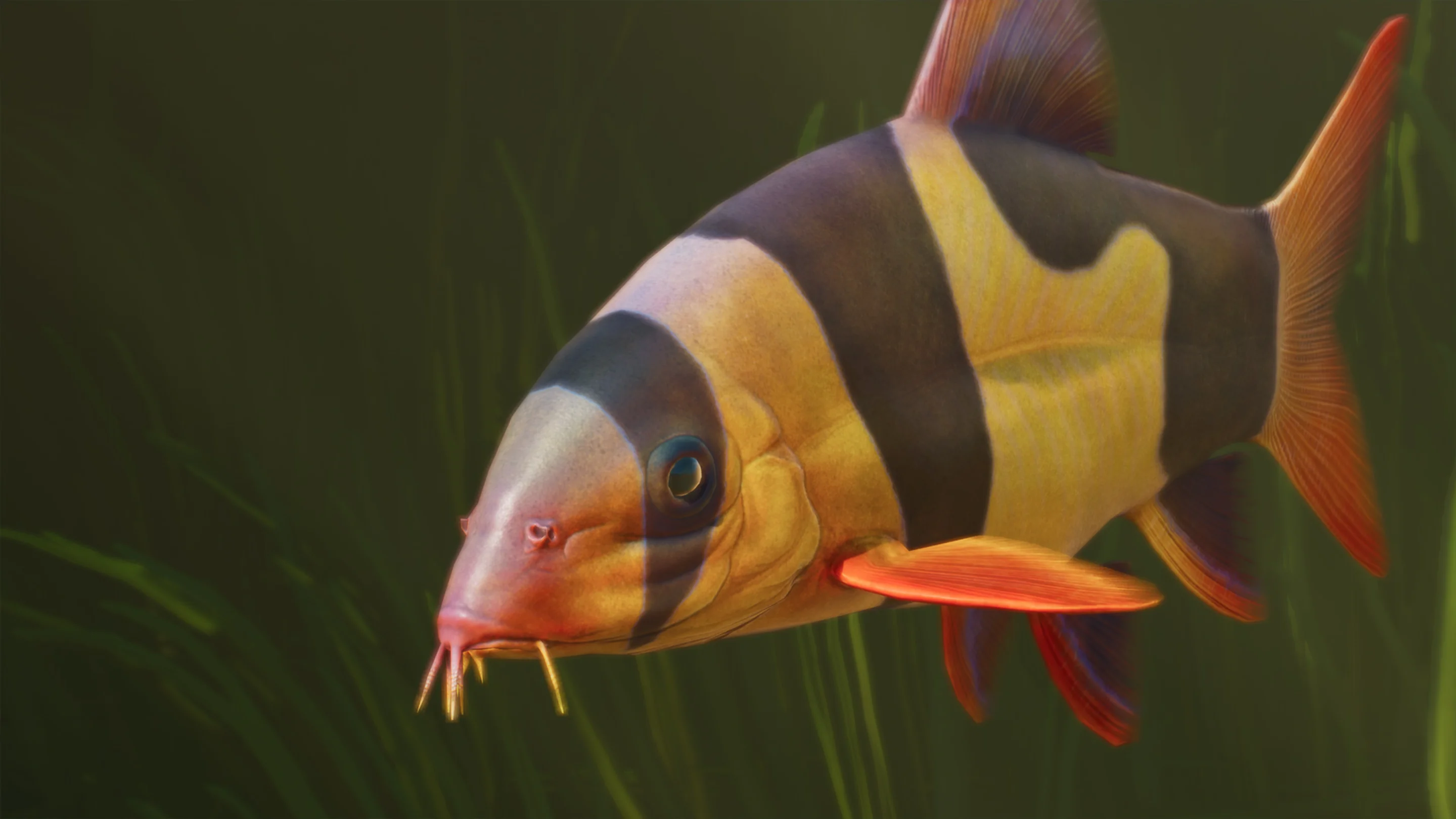
The clown loach (or Chromobotia macracanthus) is a freshwater fish native to slow-moving rivers and streams of Southeast Asia, particularly the islands of Borneo and Sumatra. It prefers tropical habitats with clear, warm water, dense vegetation, and soft substrates where it can forage and hide.
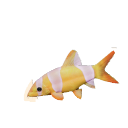
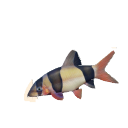
This species is instantly recognizable by its orange body with three broad, black vertical bands running across its head, mid-body, and tail, and downward-facing mouth adapted for bottom feeding.
Clown loaches typically reach up to 12in in captivity, though in the wild they occasionally grow to 16in. Adults usually weigh around 5.25oz to 10.5oz.
In the wild, clown loaches school in groups of 5-20 individuals.
Enrichments
Food-Based Enrichments
Aquatic Feeder - Flakes
Conservation Topics
Freshwater Ecosystem Ambience
Diurnal Behavior
Habitat Loss
Overexploitation
Omnivore Diet
Ray-finned Fish Evolution
Clown Loach Fact Sheet
Swimming Animals
Underwater Life Talk
Clown Loach Name Plate
Lifecycle
In the wild, clown loaches school in groups of 5-20 individuals.
Clown loaches exhibit a seasonal breeding pattern in the wild, often triggered by rainy seasons and changes in water flow, temperature, and chemistry in their natural riverine habitats. During spawning periods, males and females engage in courtship behaviors such as chasing, nudging, and synchronized swimming. Spawning typically occurs over soft substrates or in submerged leaf litter, where females scatter thousands of adhesive eggs that stick to plants or other surfaces. Fertilization is external, and both males and females may participate in repeated spawning events over the breeding season.
Eggs hatch within 24 to 36 hours, producing tiny, transparent larvae that drift in the water column before settling to the substrate as juveniles. Juveniles initially rely on shelter among roots, leaf litter, or dense vegetation to avoid predation.
Growth is relatively slow in the wild, with individuals reaching sexual maturity at around 3 or 4 years of age, depending on food availability and environmental conditions.
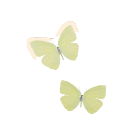
Colourmorphs
Part Leucistic
Olive Morph
Statistics
Gestation / Incubation Period
0 months
Interbirth Period
3 months
Reproduction Difficulty
Easy
Age Of Sexual Sterility
death
Age Of Sexual Maturity
3 years
Juvenile3.5 years
Adult16.5 years
Elderly20 years
Animal Facts
Clown loaches can produce clicking or squeaking sounds by rubbing their pharyngeal teeth together, often when stressed or during social interactions.
Clown loaches are one of the most sought-after freshwater aquarium fish due to their striking coloration, playful personality, and social nature.
Juvenile clown loaches are much more vividly colored than adults and tend to hide in dense vegetation or under rocks to avoid predators.
Clown loaches can eat a wide variety of foods, from worms and crustaceans to algae and plant matter, which makes them adaptable in captivity.
Clown loaches can survive in low-oxygen waters better than many other tropical freshwater species due to their hardy physiology.
Conservation
The clown loach is considered a species of Least Concern. In the late 1990s, annual collection for the aquarium trade was estimated at 20 million individuals, escalating to 50 million by 2009. This intense harvesting, coupled with habitat loss from activities like peatland conversion and wetland reclamation for construction and palm oil plantations, has significantly impacted wild populations. The rapid decline in numbers and the pressures on their natural habitats raise concerns about their long-term viability.
Efforts to mitigate these threats include advancements in artificial breeding techniques and sustainable aquaculture practices. Researchers have developed hormonal induction methods to stimulate spawning in controlled environments, facilitating the production of juveniles for the aquarium trade without further depleting wild stocks. Additionally, aquaculture initiatives aim to enhance growth rates and reduce production costs, addressing challenges associated with the species' slow growth.
Conservation strategies are crucial for ensuring the clown loach's survival and maintaining the ecological balance of its native freshwater ecosystems.
Native Range
Asia
Statistics
Wild Population
Unknown
Conservation Status
Least Concern
Valid Reserves
Sumatra Reserve
Valid Release Group Types
Mixed Group
Are you ready to run a zoo?
Prove your knowledge and create a personalised certificate endorsed by the Fauna & Ecosystems Network for the Clown Loach.
Planet Zoo 2 is in active development and the Zoopedia reflects this work in progress. Text, images, stats etc. are not necessarily final and may change or be expanded upon.



 Aquatic Feeder - Flakes