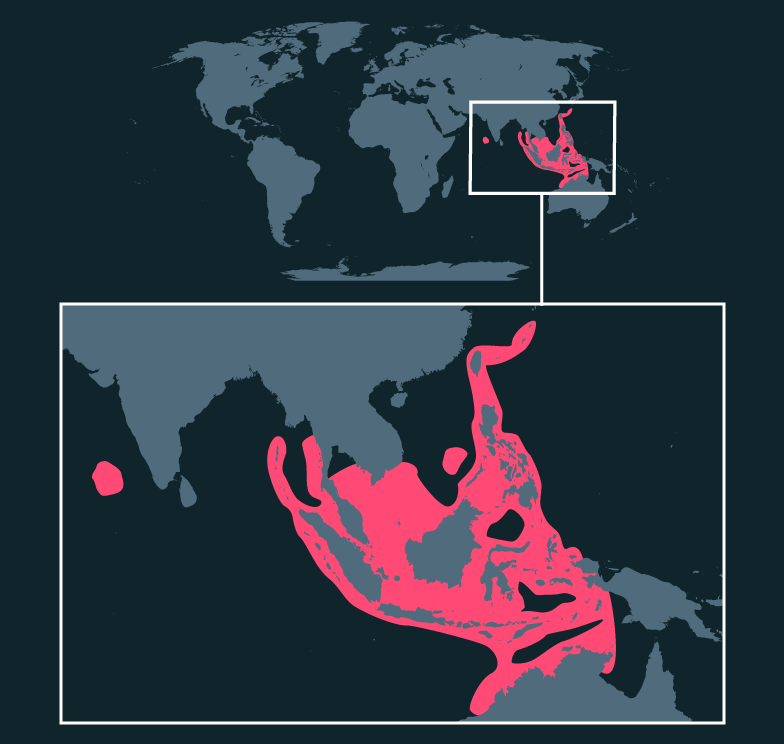
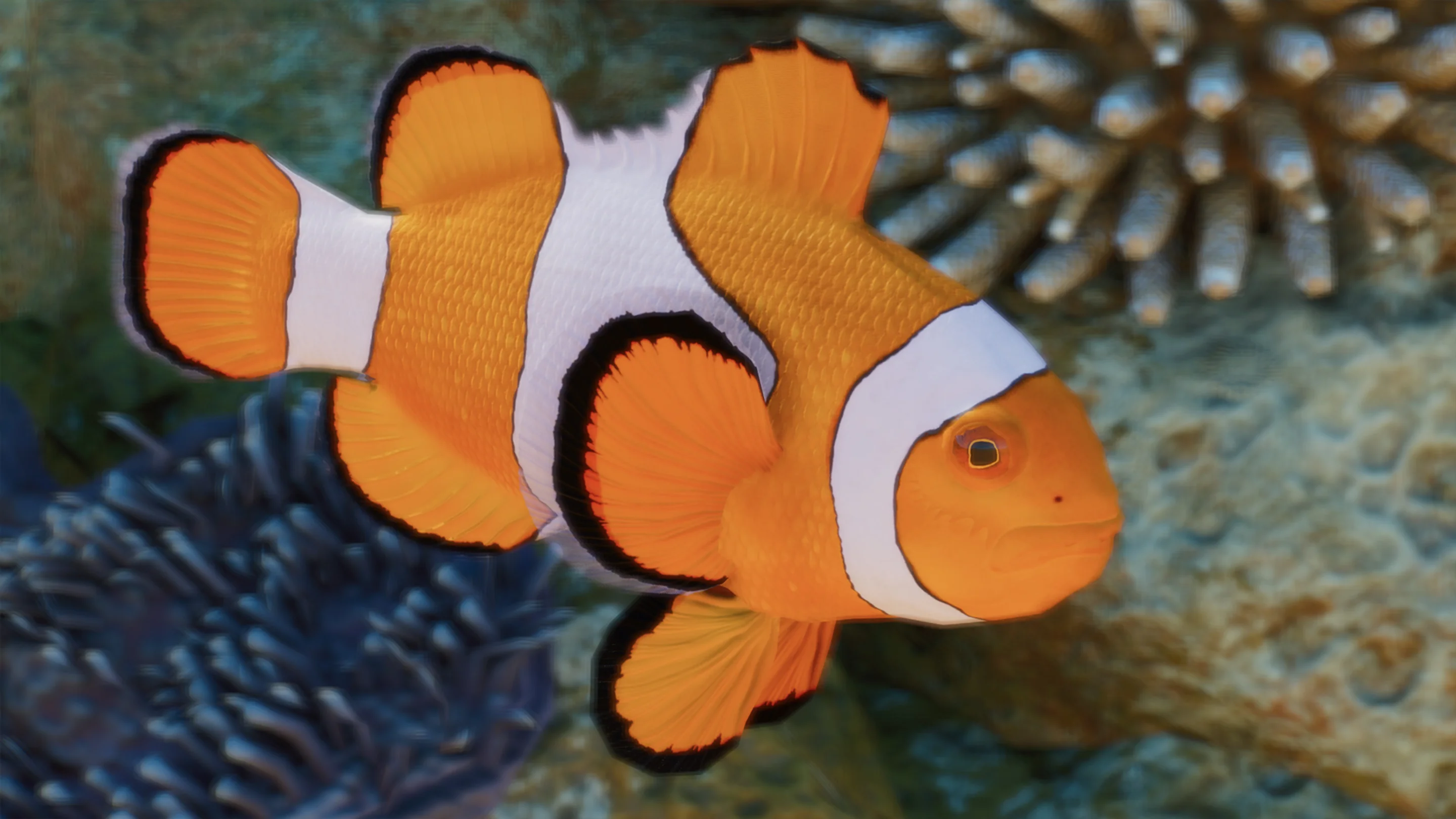
Clown anemonefish (or Amphiprion ocellaris) inhabit shallow coral reefs and sheltered lagoons across the Indo-Pacific region, including areas around Indonesia, the Philippines, northern Australia, and parts of the Indian Ocean. They are typically found living in close association with host sea anemones, which provide them with shelter and protection from predators.
They are easily recognizable by their vibrant orange coloration and three distinct white bands edged in black.
Adult clown anemonefish measure 3.2in to 4.4in in length.
Clown anemonefish are highly social, living in small, structured groups within sea anemones where they form strict dominance hierarchies, with a dominant breeding pair and non-breeding subordinates that rely on close social interactions for group stability and protection.
Enrichments
Food-Based Enrichments
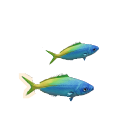
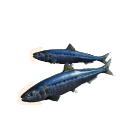
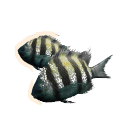
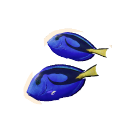
Aquatic Feeder - Flakes
Conservation Topics
Reef Ecosystem Ambience
Diurnal Behavior
Climate Change
Habitat Loss
Omnivore Diet
Ray-finned Fish Evolution
Clown Anemonefish Fact Sheet
Swimming Animals
Underwater Life Talk
Poaching and the Exotic Pet Trade
Clown Anemonefish Name Plate
Lifecycle
Clown anemonefish are highly social, living in small, structured groups within sea anemones where they form strict dominance hierarchies, with a dominant breeding pair and non-breeding subordinates that rely on close social interactions for group stability and protection.
Clown anemonefish breed year-round. Their reproductive strategy is known as protandrous hermaphroditism, where all individuals are born male, and the dominant male can change sex to become female if the resident female dies. Reproduction occurs within a stable social group consisting of a dominant breeding pair and several smaller non-breeding males.
The female lays hundreds of adhesive eggs on a flat surface near the host anemone, and the male takes on the primary role of guarding and aerating the eggs until they hatch, usually within 6 to 10 days.
Upon hatching, the larvae are planktonic and drift in the open ocean for about 1 to 2 weeks before settling back onto a reef and seeking a suitable anemone host. Growth and maturation are influenced by social rank, with the largest male assuming breeding duties only if the dominant female dies, thus maintaining the social hierarchy and stability of the group. Sexual maturity is typically reached between 1 and 2 years old.
Statistics
Gestation / Incubation Period
0 months
Interbirth Period
3 months
Reproduction Difficulty
Easy
Age Of Sexual Sterility
death
Age Of Sexual Maturity
1 years
Juvenile1.5 years
Adult8.5 years
Elderly15 years
Animal Facts
Clown anemonefish live in mutualistic relationships with sea anemones, gaining protection from predators thanks to the anemone’s stinging tentacles, while the fish help keep the anemone clean and defend it.
Clown anemonefish are born male and can change sex to become female, usually when the dominant female in a group dies.
Clown anemonefish fiercely defend their anemone territory against intruders, often chasing away much larger fish.
Clown anemonefish use a series of popping and clicking sounds to communicate with other clownfish, especially during territorial disputes.
Clown anemonefish are among the most popular saltwater fish kept in home aquariums worldwide because of their bright colors and interesting behavior.
Conservation
Clown anemonefish are a species of Least Concern. They are vulnerable to habitat degradation, climate change, and overcollection for the aquarium trade. The destruction of coral reefs, particularly the loss of sea anemones has significantly impacted wild populations. Coral bleaching caused by rising ocean temperatures disrupts the symbiotic relationship between clownfish and their host anemones, making it harder for the fish to find shelter and reproduce. Additionally, clownfish are among the most popular species in the marine aquarium trade, causing local population declines.
To address these threats, several conservation strategies have been implemented. Marine protected areas help safeguard reef habitats and the ecological relationships between clownfish and their anemones. Clownfish breed readily in captivity, and many aquariums now source individuals from breeding programs rather than from the wild, reducing pressure on wild populations. Public awareness campaigns have also increased interest in protecting marine ecosystems.
Together, these efforts aim to preserve clown anemonefish populations while promoting broader reef conservation.
Native Range
Indo-Pacific reefs
Statistics
Wild Population
Unknown
Conservation Status
Least Concern
Valid Release Group Types
Mixed Group
Are you ready to run a zoo?
Prove your knowledge and create a personalised certificate endorsed by the Fauna & Ecosystems Network for the Clown Anemonefish.
Planet Zoo 2 is in active development and the Zoopedia reflects this work in progress. Text, images, stats etc. are not necessarily final and may change or be expanded upon.



 Aquatic Feeder - Flakes