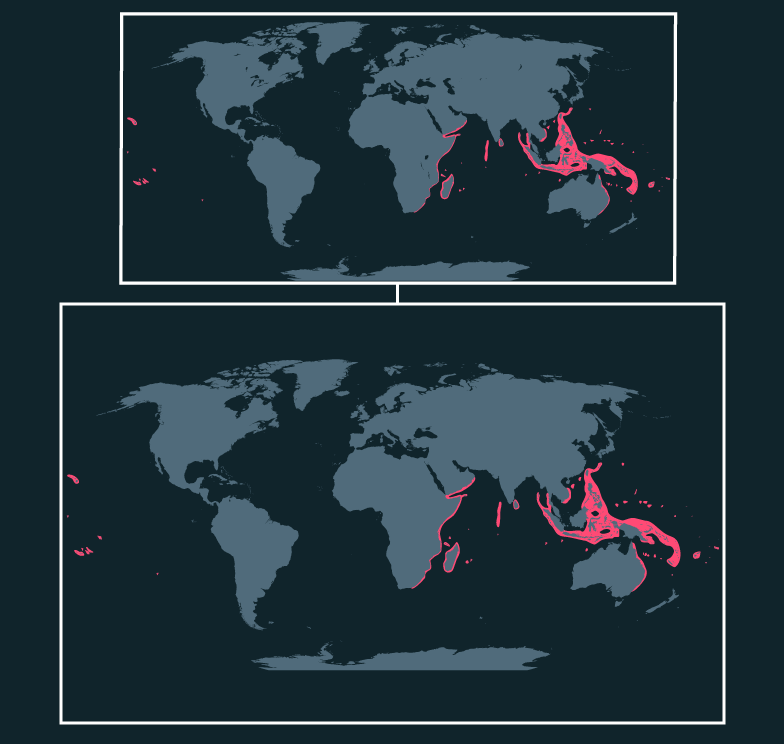
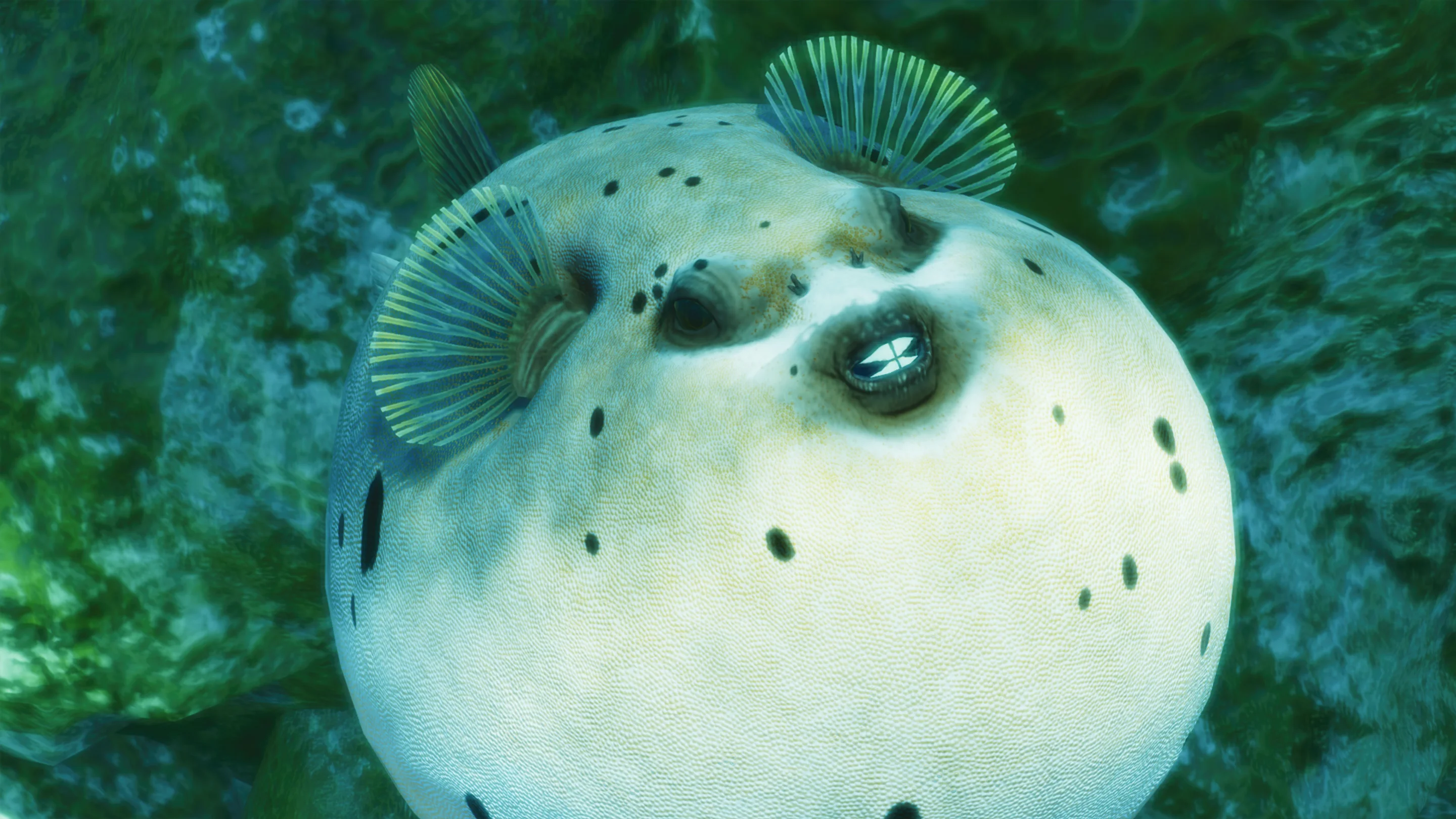
The blackspotted pufferfish (or Arothron nigropunctatus), also known as the dog-faced pufferfish, is a tropical marine fish commonly found throughout the Indo-Pacific region from the Eastern coast of Africa to the islands of the central Pacific Ocean. It typically inhabits coral reefs, reef slopes, and lagoons at a depth of up to 82.5ft.
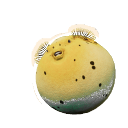
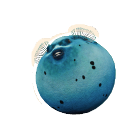
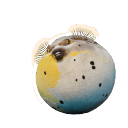
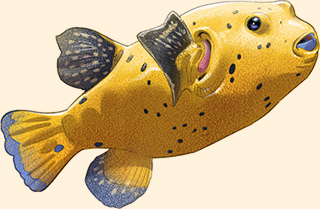
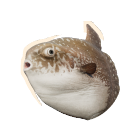
Blackspotted puffers are characterized by their stout, rounded bodies and short, ‘puppy-like’ snouts. Their coloration varies from pale grey to yellow to blue, or a combination thereof, with scattered black spots and sometimes dark patches around the eyes or along the back.
Blackspotted puffers grow to an adult length of up to 13.2in.
Blackspotted puffers are solitary and territorial, only interacting with conspecifics during the breeding season.
Enrichments
Food-Based Enrichments
Forage Tray
Habitat Enrichments
Submarine Buoy
Bubble Blower - Airstone
Conservation Topics
Reef Ecosystem Ambience
Diurnal Behavior
Habitat Loss
Omnivore Diet
Ray-finned Fish Evolution
Blackspotted Puffer Fact Sheet
Swimming Animals
Underwater Life Talk
Poaching and the Exotic Pet Trade
Blackspotted Puffer Name Plate
Lifecycle
Blackspotted puffers are solitary and territorial, only interacting with conspecifics during the breeding season.
Scientific studies on the reproduction and life history of the blackspotted puffer are limited, though it is thought to follow the life cycle patterns typical of many other pufferfish.
Blackspotted pufferfish appear to mate year-round. Males and females engage in courtship displays like circling and body movements near the reef substrate. Females lay eggs in the open water or onto the substrate, fertilization occurs externally as males spawn.
Unlike some other species of pufferfish, the blackspotted puffer does not provide parental care. The fertilized eggs hatch into planktonic larvae, which drift and grow in the ocean currents for several weeks before settling on the reef as juveniles.
The juveniles grow rapidly, feeding on small invertebrates and algae. A blackspotted puffer typically reaches sexual maturity between 2 and 3 years old, at a size of around 8in to 10in.
Colourmorphs
Yellow Morph
Blue Morph
Piebald
Statistics
Litter Size
1-5
Gestation / Incubation Period
0 months
Interbirth Period
12 months
Reproduction Difficulty
Easy
Age Of Sexual Sterility
death
Age Of Sexual Maturity
2 years
Juvenile2 years
Adult5 years
Elderly3 years
Animal Facts
The blackspotted puffer contains tetrodotoxin, a powerful neurotoxin that is lethal to predators and humans if ingested.
Like many pufferfish, the blackspotted puffer can inflate its body by taking in water (or air) to deter predators, as it will look much larger and will be harder to eat.
The blackspotted puffer has thick, leathery skin instead of scales which help it resist injury and parasites.
The genus name Arothron comes from the Greek words 'a-', which expresses absence, and ‘rothron’, meaning nostril. These pufferfish have prominent nasal tentacles without openings.
The blackspotted puffer has a strong, beak-like mouth made of fused teeth, perfect for crunching on hard prey like crustaceans, mollusks, and coral-dwelling invertebrates.
Conservation
Blackspotted pufferfish are of Least Concern, though are facing some general conservation challenges, primarily linked to habitat degradation and the marine aquarium trade. Coral reef degradation caused by climate change, ocean acidification, coastal development, and destructive fishing practices pose a major threat to their natural habitat: blackspotted pufferfish rely on coral reefs for shelter and food availability. Localized overharvesting for aquarium collections and habitat decline could have long-term impacts on population stability if unmanaged.
Although direct conservation actions specific to this fish are limited, broader reef conservation efforts play a crucial role in supporting their long-term survival. Established marine protected areas in key parts of the Indo-Pacific have helped safeguard critical reef habitats from destruction. Campaigns for sustainable aquarium trade practices have also promoted captive breeding and responsible sourcing. Continuation of these measures, and monitoring of population trends, are essential to ensure the blackspotted puffers’ abundance in its natural range.
Native Range
Indo-Pacific reefs and lagoons
Statistics
Wild Population
Unknown
Conservation Status
Least Concern
Valid Release Group Types
Solitary Male
Solitary Female
Are you ready to run a zoo?
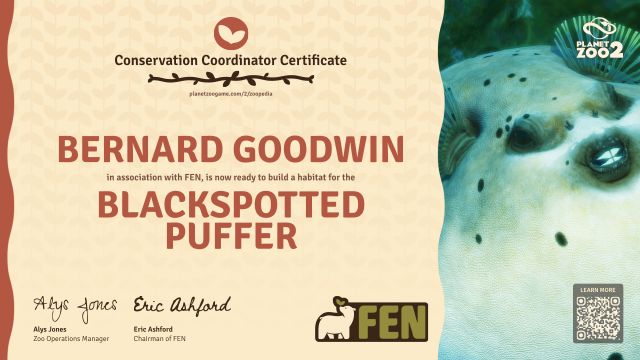
Prove your knowledge and create a personalised certificate endorsed by the Fauna & Ecosystems Network for the Blackspotted Puffer.
Planet Zoo 2 is in active development and the Zoopedia reflects this work in progress. Text, images, stats etc. are not necessarily final and may change or be expanded upon.




 Forage Tray
 Submarine Buoy
 Bubble Blower - Airstone