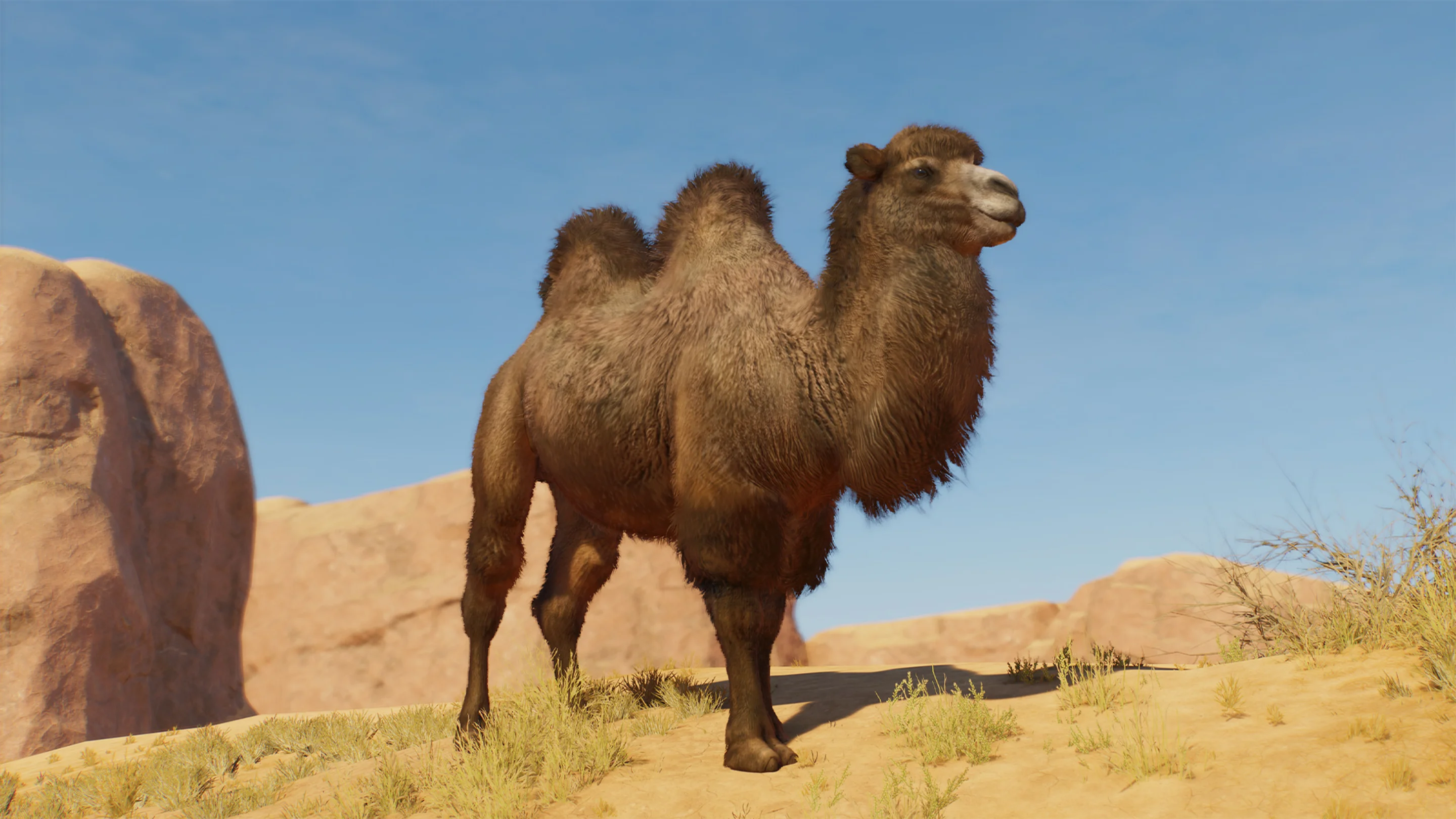
The Bactrian camel (or Camelus bactrianus) is a large ungulate native to Central Asia. It is also known as the Mongolian camel, two-humped camel or double humped camel. It is closely related to the wild Bactrian camel (C. ferus), but both share a common ancestor.
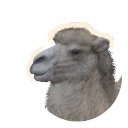
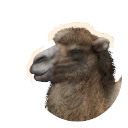
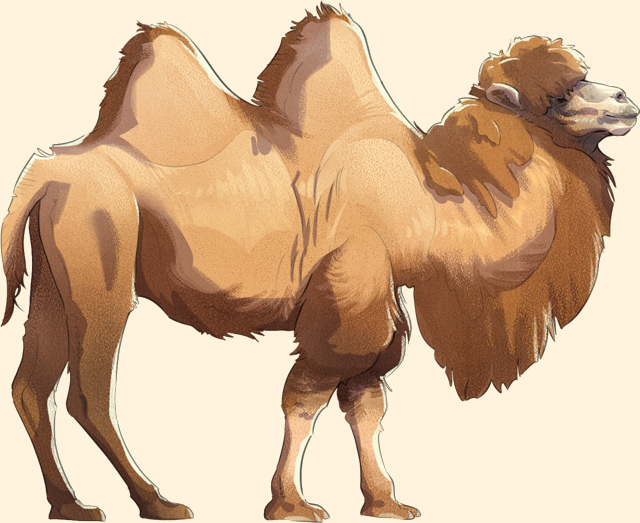
The (domesticated) Bactrian camel has two humps and thick sandy-colored wool coats, although it can also be dark brown or white.
Shoulder height ranges from 1.6m to 1.8m tall, and total height including the humps may reach up to 2.3m tall. Bactrian camels weigh between 300kg and 1,000kg. Males may be up to 20% larger than females, and are also heavier, at an average of 600kg compared to 480kg.
Camels are social animals, living in harem groups in the wild comprised of a dominant male, several female mates and their offspring. The dominant male leads the herd in their migrations. Bachelor males live solitarily or in 'bachelor herds' until they acquire their own harem of females.
Enrichments
Food-Based Enrichments
Grazing Ball Feeder
Barrel Feeder - Hanging
Hanging Grazer Feeder
Barrel Feeder - Large
Melon Feeder
Scarecrow Feeder
Suspended High Grazer Feeder
Habitat Enrichments
Grab Ball
Large Ball
Rubbing Pillar
Skittle
Plant Screen
Rubber Chicken
Mud Bath
Conservation Topics
Grassland Ecosystem Ambience
Diurnal Behavior
Herbivore Diet
Mammal Evolution
Bactrian Camel Fact Sheet
Vocal Animals
The Animal Kingdom Talk
Domestication
Bactrian Camel Name Plate
Lifecycle
Camels are social animals, living in harem groups in the wild comprised of a dominant male, several female mates and their offspring. The dominant male leads the herd in their migrations. Bachelor males live solitarily or in 'bachelor herds' until they acquire their own harem of females.
Bactrian camels are a domesticated species, though some herds are kept semi-wild and display their natural mating behaviors.
The mating season in Bactrian camels is in March and April, but because camels are induced ovulators, breeders may also use artificial insemination to choose another time for conception. During the natural mating period, the dominant male in a harem will mate with all adult females and may be violent towards other males.
Female Bactrian camels are pregnant for about 13 months and give birth to 1 calf, though twins occur occasionally. Calves nurse from their mothers for up to 1.5 years.
The young remain with their mother and herd until between 3 and 5 years old, which is also when sexual maturity is reached, and then leave to establish or join an unrelated herd.
Colourmorphs
Leucistic
Piebald
Statistics
Litter Size
1-1
Gestation / Incubation Period
13 months
Interbirth Period
23 months
Reproduction Difficulty
Easy
Age Of Sexual Sterility
35 years
Age Of Sexual Maturity
6 years
Juvenile6 years
Adult29 years
Elderly10 years
Animal Facts
Bactrian camels are not born with humps. They start developing once a camel calf begins eating solid food.
Camels have long eyelashes and nostrils that can fully close to protect themselves in sandstorms.
The Bactrian camel's two humps are made of fat and are built up during times of plentiful food, then shrink as they sustain the camel through times when food is sparse.
Bactrian camels are not fussy about what they eat; they can eat thorny, tough and bitter vegetation, carrion and will also eat tents, rope, clothes and other items when very hungry.
Bactrian camels were domesticated 4000 years ago in the steppes of Central Asia; they are farmed as pack animals and for their milk and wool.
Conservation
The Bactrian camel is a domesticated species with a large and stable population, and therefore not threatened. However, the related wild Bactrian camel is Critically Endangered and nearing extinction. In captivity, the domesticated Bactrian camel acts as an ambassador species to raise awareness and funds and presents research opportunity that may benefit the wild species’ survival.
Wild Bactrian camels survive only in small fragmented herds across the Gobi desert. They are threatened by habitat loss, poaching, poisoning, disturbance from mining and infrastructure projects, and hybridization with feral domesticated Bactrian camels. These pressures are worsened by low numbers and the remoteness of its range, which makes monitoring and rapid response difficult.
Conservation focuses strongly on habitat protection and anti-poaching patrols. Additionally, a captive-breeding facility is providing population insurance. Some organizations also focus on community outreach to reduce hybridization risks, and campaign to reduce infrastructure disturbance in key landscapes.
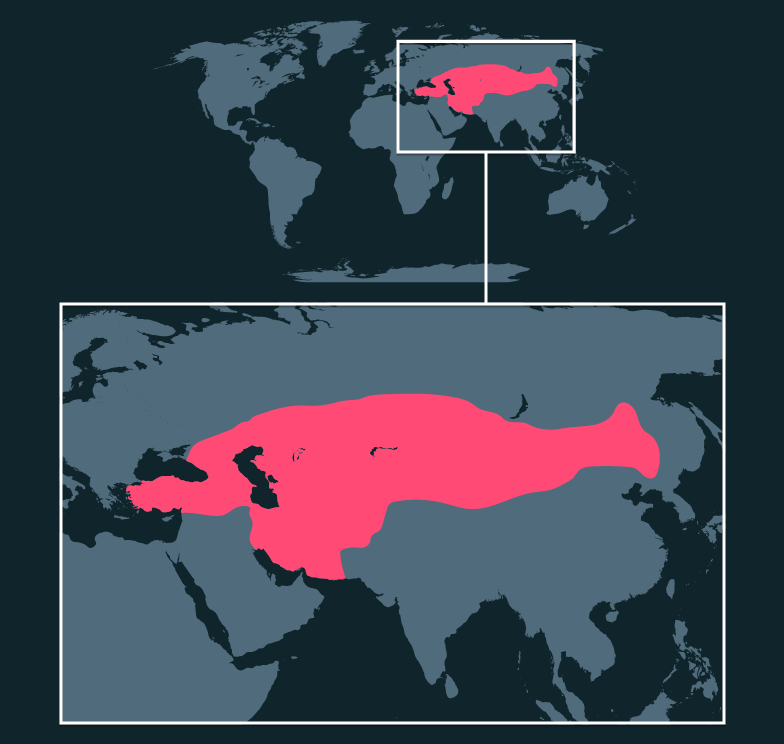
Native Range
Asia
Statistics
Wild Population
2,000,000 (estimated)
Conservation Status
Domesticated
Are you ready to run a zoo?
Prove your knowledge and create a personalised certificate endorsed by the Fauna & Ecosystems Network for the Bactrian Camel.
Planet Zoo 2 is in active development and the Zoopedia reflects this work in progress. Text, images, stats etc. are not necessarily final and may change or be expanded upon.






 Grazing Ball Feeder
 Barrel Feeder - Hanging
 Hanging Grazer Feeder
 Barrel Feeder - Large
 Melon Feeder
 Scarecrow Feeder
 Suspended High Grazer Feeder
 Grab Ball
 Large Ball
 Rubbing Pillar
 Skittle
 Plant Screen
 Rubber Chicken
 Mud Bath