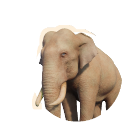
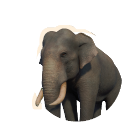
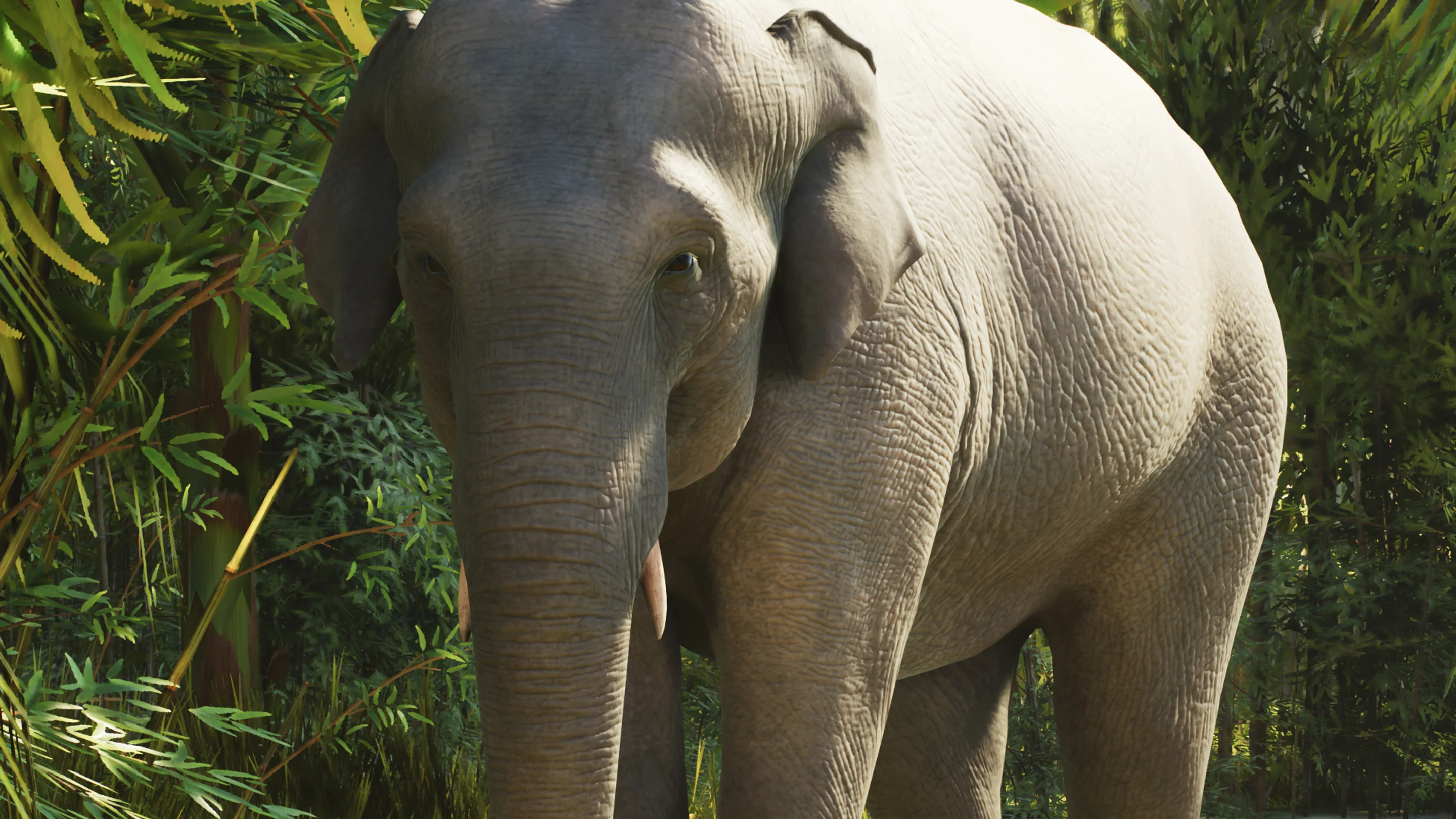
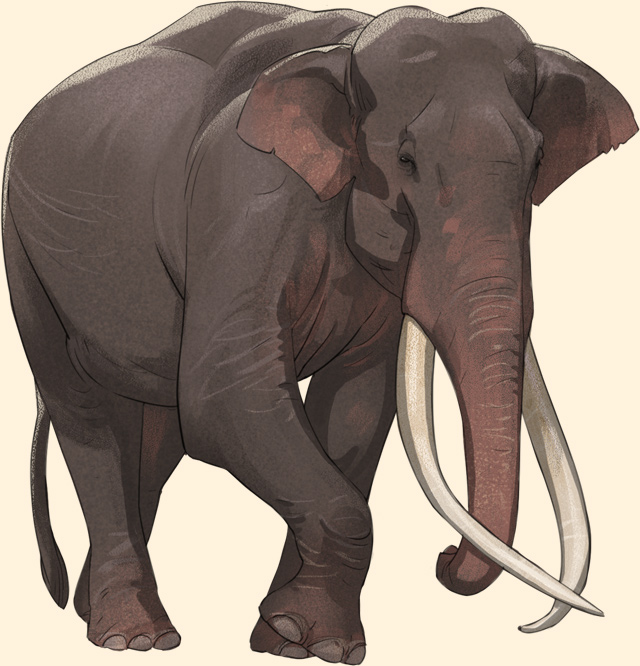
Native to both Central and Southeast Asia, the Asian elephant (or Elephas maximus) is a species distinguishable by a distinctive trunk, small ears, and grey skin with pink mottling around the face.
They are large herbivores and live in a variety of different environments, including forests, grasslands and mountains, wherein they feed on tree leaves, bark and grasses.
Asian elephants are smaller than their African counterparts, with males reaching an average height of 2.75m and weighing 4000kg, compared to the female average of 2.40m and 2400kg.
Elephants are mostly social animals, with females living, travelling and foraging in tight-knit herds with their calves. They will also care for each other and help each other raise young. These herds are matrilineal – normally, the oldest female will lead the group and, when she dies, the next oldest female will take her place. Young adult male elephants live loosely bonded in bachelor herds and travel together to locate food and mates. The exception is mature males, who will often live alone.
Enrichments
Food-Based Enrichments
Barrel Feeder - Hanging
Veggie Jelly Cake
Barrel Feeder - Large
Fixed Roller Feeder - Large
Melon Feeder
Suspended High Grazer Feeder
Tree Scatter Feeder
Habitat Enrichments
Gyro
Rubbing Pillar
Skittle
Large Tire
Large Ball
Musical Keyboard
Mud Bath
Conservation Topics
Rainforest Ecosystem Ambience
Diurnal Behavior
Habitat Loss
Human-Wildlife Conflict
Poaching and the Exotic Pet Trade
Herbivore Diet
Mammal Evolution
Asian Elephant Fact Sheet
Vocal Animals
The Animal Kingdom Talk
Asian Elephant Name Plate
Lifecycle
Elephants are mostly social animals, with females living, travelling and foraging in tight-knit herds with their calves. They will also care for each other and help each other raise young. These herds are matrilineal – normally, the oldest female will lead the group and, when she dies, the next oldest female will take her place. Young adult male elephants live loosely bonded in bachelor herds and travel together to locate food and mates. The exception is mature males, who will often live alone.
Asian elephants can mate year round, but fertility peaks during rainy seasons. To mate, male elephants will track female herds. Their success is dependent on their maturity, as well as the receptiveness of the female, and he is also more likely to receive a female's attraction if he's going through 'musth' – a time of heightened aggression and virility due to an increase in his testosterone levels. The two will then court by chasing after and vocalizing to one another.
An elephant pregnancy lasts between 18 and 22 months before the birth of a single calf, who will stay with its mother until the age of 8. At this point, females stay with their mother's herd, whereas males leave and join a bachelor herd of other young males.
Colourmorphs
Albino
Piebald
Statistics
Litter Size
1-1
Gestation / Incubation Period
22 months
Interbirth Period
96 months
Reproduction Difficulty
Easy
Age Of Sexual Sterility
death
Age Of Sexual Maturity
11 years
Juvenile11 years
Adult40 years
Elderly19 years
Animal Facts
Elephants migrate at the beginning of the dry season to areas with more food and water.
Despite popular opinion, elephants do not use their trunk to drink; they use it to funnel water into their mouth.
Elephants have been known to use tree branches to swat flies, dislodge parasites and scratch themselves.
In the wild, elephants have mutualistic relationships with birds that remove parasites from their skin.
Asian elephants are more closely related to mammoths than African elephants.
Conservation
The species is Endangered, threatened primarily by the loss, degradation and fragmentation of their habitat. All of these are a result of humanity's expansion into their lands, and furthermore this sharing of space causes additional conflict between the two; the animals trample crops and destroy farmland, and thus are often killed by humans. Poaching is also a threat but to a lesser extent than African elephants because their tusks are much smaller and only present in mature males.
In order to conserve the Asian elephant, efforts are being made to protect their habitats and provide connections between populations that have become separated by the change in land use. Indian conservation groups are also conducting research on the conflict between farmers and elephants, in order to propose adaptive management schemes as problems arise.
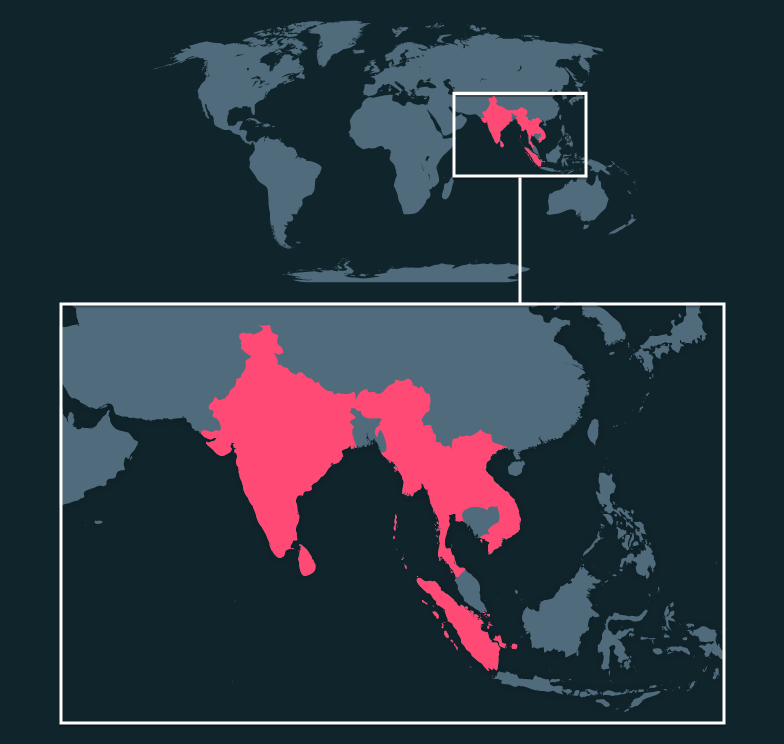
Native Range
Asia
Statistics
Wild Population
20,000-25,000
Conservation Status
Endangered
Valid Reserves
Sumatra Reserve
Valid Release Group Types
Male Bachelor Herd
Female Bachelor Herd
Solitary Male
Are you ready to run a zoo?
Prove your knowledge and create a personalised certificate endorsed by the Fauna & Ecosystems Network for the Asian Elephant.
Planet Zoo 2 is in active development and the Zoopedia reflects this work in progress. Text, images, stats etc. are not necessarily final and may change or be expanded upon.




 Barrel Feeder - Hanging
 Veggie Jelly Cake
 Barrel Feeder - Large
 Fixed Roller Feeder - Large
 Melon Feeder
 Suspended High Grazer Feeder
 Tree Scatter Feeder
 Gyro
 Rubbing Pillar
 Skittle
 Large Tire
 Large Ball
 Musical Keyboard
 Mud Bath