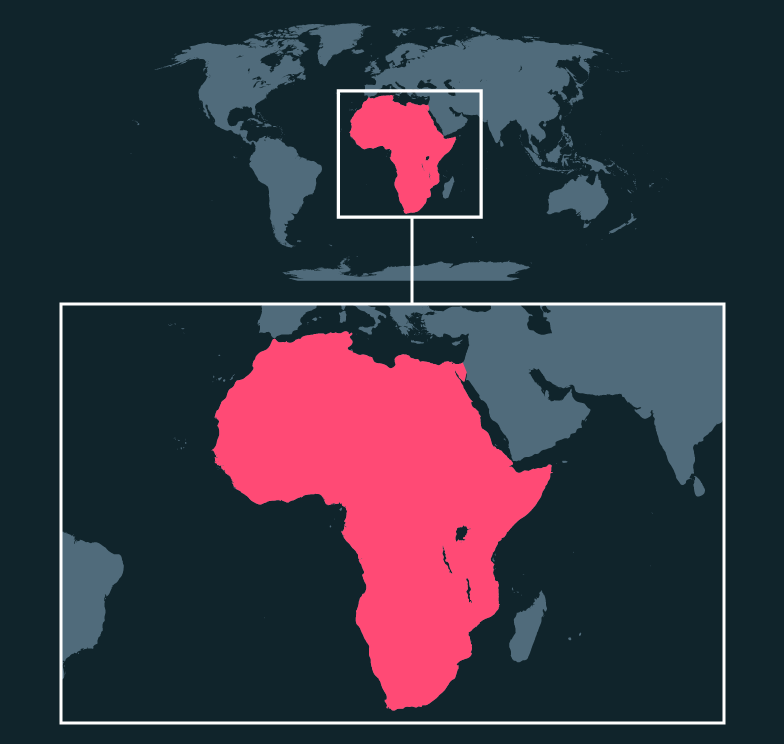
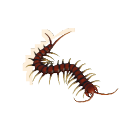
The African tigerfish (or Hydrocynus vittatus) is a widespread and powerful freshwater predator found throughout sub-Saharan Africa in major river systems and lakes, including the Congo, Nile, Zambezi, Okavango, and Lake Tanganyika basins.
These fish are streamlined and silvery with thin black horizontal stripes, a deeply forked tail often with reddish edges, and a large head armed with interlocking, pointed teeth.
Females are generally larger and more robust than males. Females can reach up to about 105cm in length and 10kg to 15kg in weight, while males are typically smaller, averaging up to 74cm in length and 12kg in weight.
African tigerfish are best described as asocial to loosely aggregative predators: juveniles show schooling behavior, while adults are largely independent hunters that tolerate one another only when conditions favor it.
Enrichments
Food-Based Enrichments
Aquatic Feeder - Fish
Conservation Topics
Freshwater Ecosystem Ambience
Cathemeral Behavior
Carnivore Diet
Ray-finned Fish Evolution
African Tigerfish Fact Sheet
Swimming Animals
Underwater Life Talk
Overexploitation
Population Fragmentation
Pollution
African Tigerfish Name Plate
Lifecycle
African tigerfish are best described as asocial to loosely aggregative predators: juveniles show schooling behavior, while adults are largely independent hunters that tolerate one another only when conditions favor it.
The African tigerfish has a reproductive strategy closely tied to seasonal river flooding. Courtship behavior is relatively minimal and largely indirect, with spawning triggered by environmental cues such as rising water levels, increased current flow, and temperature changes during the rainy season. As rivers overflow onto floodplains, adult tigerfish migrate into newly inundated areas where food is abundant, and predation pressure is lower. Spawning occurs in open water or among flooded vegetation, where males and females release eggs and milt simultaneously for external fertilization.
There is no parental care, and adults quickly return to deeper channels once spawning is complete. After fertilization, the eggs hatch rapidly, usually within 24 to 48 hours, an adaptation that reduces exposure to predation and unstable floodplain conditions. The larvae and fry develop in shallow, food-rich floodwaters, feeding initially on plankton and small invertebrates before transitioning to a piscivorous diet as they grow.
Juveniles often form small schools, which provide some protection from predators and improve feeding success. Growth is fast, and individuals become effective predators at a relatively young age, gradually shifting to a solitary lifestyle as they mature. Sexual maturity is typically reached within 2 to 3 years, and adults may live for 10 to 20 years, repeating seasonal spawning migrations multiple times throughout their lifespan.
Statistics
Gestation / Incubation Period
0 months
Interbirth Period
11 months
Reproduction Difficulty
Easy
Age Of Sexual Sterility
death
Age Of Sexual Maturity
2 years
Juvenile2.5 years
Adult17.5 years
Elderly20 years
Animal Facts
In some regions of Africa, tigerfish carry a mythical reputation and local names (e.g. Swahili “mbenga” meaning “dangerous fish”), reflecting respect and cautious attitudes toward them.
African tigerfish have large, interlocking, dagger-like teeth that protrude even when their mouths are closed, perfect for grabbing and tearing prey.
The African tigerfish’s tail and paired fins can show red, yellow, or orange pigmentation, particularly in adult males.
African tigerfish are oxygen-sensitive and reliant on healthy prey populations, thus their presence often signals a well-functioning river ecosystem.
The African tigerfish maintain defined home ranges in rivers but can make long excursions of several miles while hunting or spawning.
Conservation
The African tigerfish is a species of Least Concern, and has a wide distribution across sub-Saharan Africa, where tigerfish are both an ecological component and an important economic resource for local communities. Some populations of tigerfish have declined because of pollution, water extraction, unregulated fishing pressure and physical barriers that disrupt migration routes, spawning and cause population fragmentation.
Tigerfish are a protected species in some areas, and research has focused on understanding water quantity and quality requirements of key rivers to inform habitat management and policy. Broader conservation efforts aim to improve water quality, minimize pollution from agriculture and deforestation, and maintain connectivity of freshwater systems for healthier fish populations.
Continued scientific research and the consideration of tigerfish in freshwater protected area planning helps provide a basis for evidence-based conservation strategies and an overall positive outlook for the African tigerfish.
Native Range
Africa
Statistics
Wild Population
Unknown
Conservation Status
Least Concern
Valid Reserves
Great Rift Valley Reserve
Tanzania Reserve
Valid Release Group Types
Mixed Group
Are you ready to run a zoo?
Prove your knowledge and create a personalised certificate endorsed by the Fauna & Ecosystems Network for the African Tigerfish.
Planet Zoo 2 is in active development and the Zoopedia reflects this work in progress. Text, images, stats etc. are not necessarily final and may change or be expanded upon.



 Aquatic Feeder - Fish