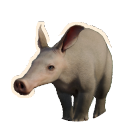
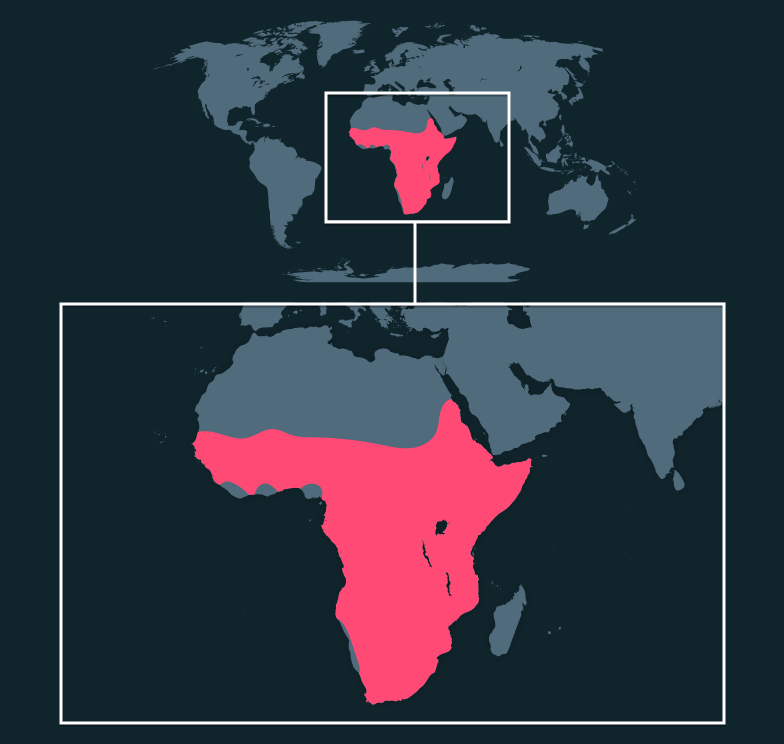
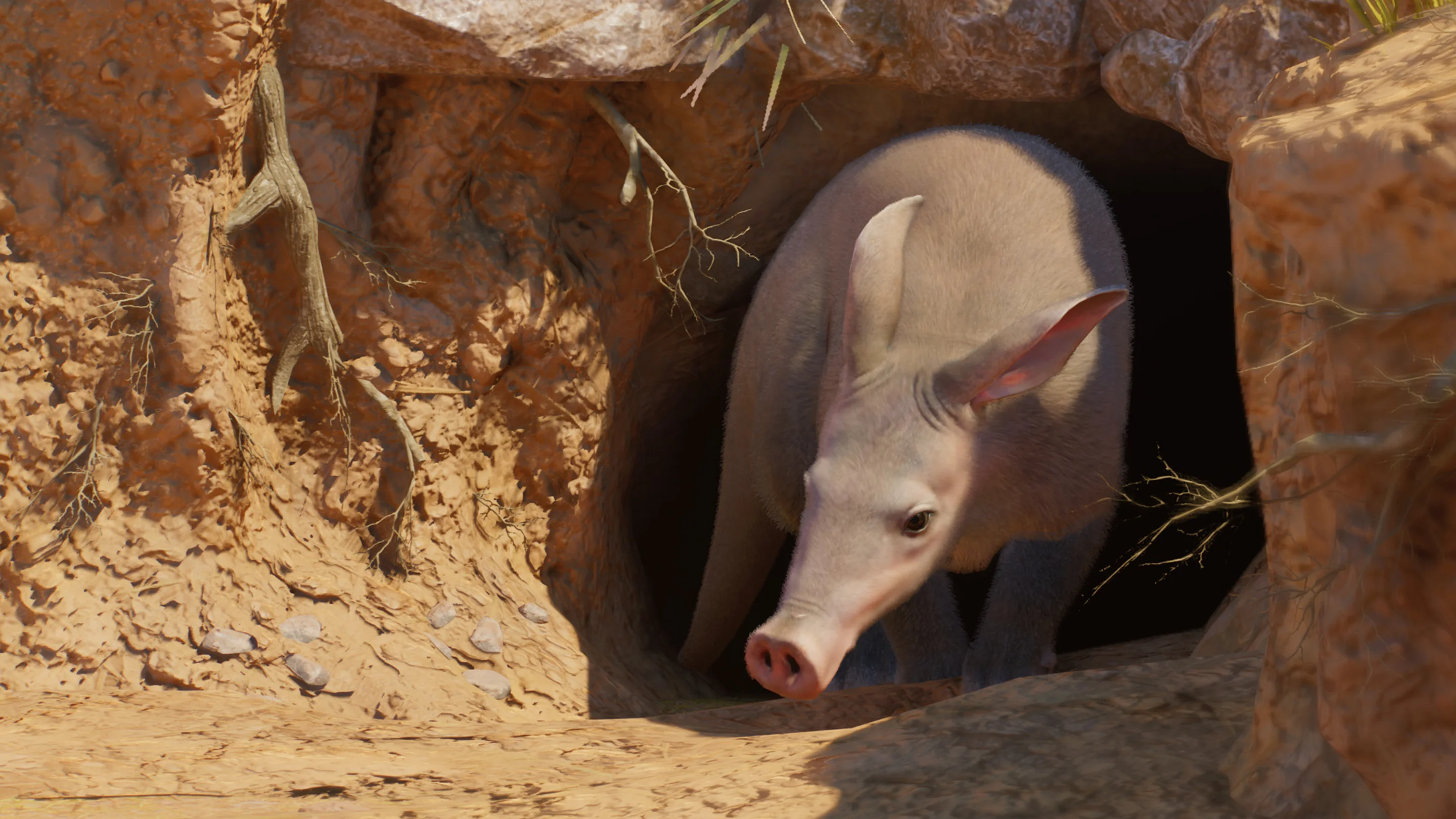
The aardvark (or Orycteropus afer) is a medium-sized insectivore that lives throughout Sub-Saharan Africa.
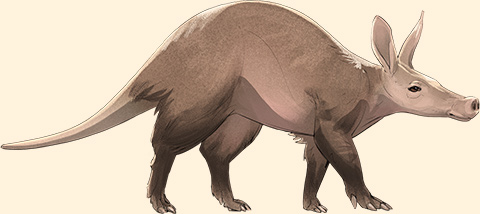
They have pink-grey skin with sparse, coarse hair, large slender ears, and an elongated head that ends in a pig-like snout.
Males are slightly larger than females, but both sexes are generally between 105cm and 130cm long, have a tail between 60cm and 70cm, and weigh between 40kg and 65kg.
With the exception of a mother and her cub, aardvarks are solitary in nature. They only interact when mating or competing over mates.
Enrichments
Food-Based Enrichments
Dog Ball
Melon Feeder
Natural Termite Mound
Slow Feeder
Termite Mound
Habitat Enrichments
Cardboard Box
Herb Scent Marker
Rubbing Pad
Rubbing Pad Bark
Small Ball
Small Ice Ball
Conservation Topics
Savannah Ecosystem Ambience
Nocturnal Behavior
Food Scarcity
Land Sharing vs Land Sparing
Insectivore Diet
Mammal Evolution
Aardvark Fact Sheet
Walking Animals
The Animal Kingdom Talk
Aardvark Name Plate
Lifecycle
With the exception of a mother and her cub, aardvarks are solitary in nature. They only interact when mating or competing over mates.
During the mating season, male aardvarks will track females in their burrows by scent and stay with them for a few days. If and when she is receptive, he will mate with her before leaving the burrow. Males may mate with several females during the mating season.
The female is pregnant for 7 months before giving birth to 1 cub, which will remain with its mother for 6 months - learning how to forage and dig burrows - before leaving and digging its own.
They become sexually mature at 2 years old.
Colourmorphs
Albino
Statistics
Litter Size
1-1
Gestation / Incubation Period
7 months
Interbirth Period
17 months
Reproduction Difficulty
Easy
Age Of Sexual Sterility
death
Age Of Sexual Maturity
2 years
Juvenile2 years
Adult14 years
Elderly12 years
Animal Facts
Aardvarks only have four toes on their front legs, possibly adapted to form 'shovel-like' feet for digging. Their nostrils are lined with coarse hair and can be closed completely to keep soil out when they are digging.
Female aardvarks have a white tail tip, believed to make it easier for their cub to follow them in the darkness of their burrows, and during foraging.
The tongue of the aardvark is 30cm long, sticky and is used to track through tunnels of ant and termite hills to collect many insects at once.
Abandoned aardvark burrows are important habitats for other animals – mostly warthogs and hyenas.
Aardvarks have a symbiotic relationship with a species called the 'aardvark cucumber', a plant which grows underground and depends entirely on the aardvark for the dispersal of its seeds. The cucumber is the only non-insect food that the aardvark eats.
Conservation
The aardvark is not endangered, but it is vulnerable in certain areas. They need a large foraging range in the wild to allow them to acquire enough food, so they are affected by land use change like the expansion of farmland and urban areas. Sometimes they are killed by farmers who want to prevent them from digging up their land, and they are also affected by pesticides that kill the insects they feed on. Ant and termite populations are also negatively affected by more frequent, climate change-induced droughts.
Aardvarks are protected in national parks and nature reserves.
Native Range
Africa
Statistics
Wild Population
Unknown
Conservation Status
Least Concern
Valid Reserves
Great Rift Valley Reserve
Tanzania Reserve
Valid Release Group Types
Female Bachelor Herd
Solitary Male
Are you ready to run a zoo?
Prove your knowledge and create a personalised certificate endorsed by the Fauna & Ecosystems Network for the Aardvark.
Planet Zoo 2 is in active development and the Zoopedia reflects this work in progress. Text, images, stats etc. are not necessarily final and may change or be expanded upon.




 Dog Ball
 Melon Feeder
 Natural Termite Mound
 Slow Feeder
 Termite Mound
 Cardboard Box
 Herb Scent Marker
 Rubbing Pad
 Rubbing Pad Bark
 Small Ball
 Small Ice Ball