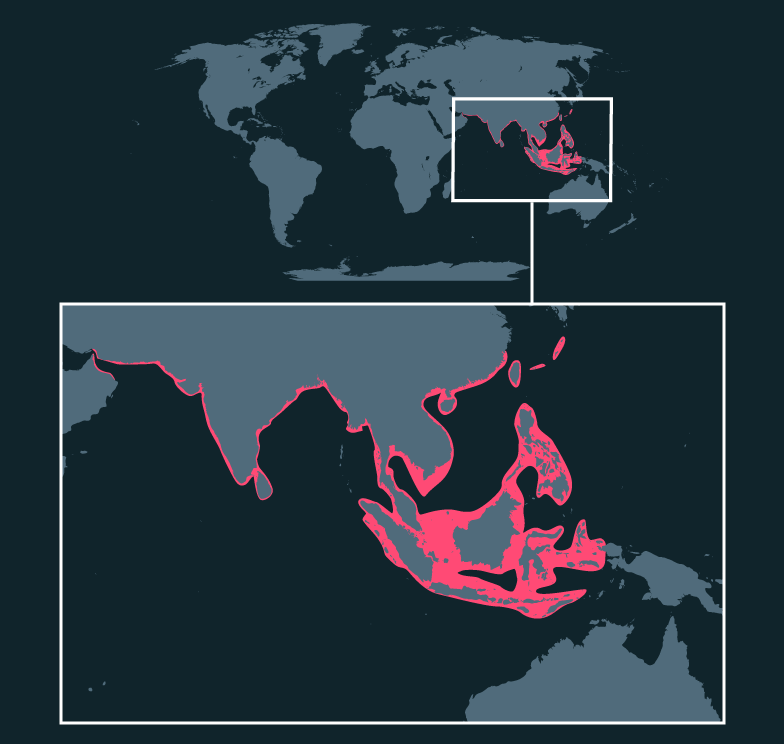
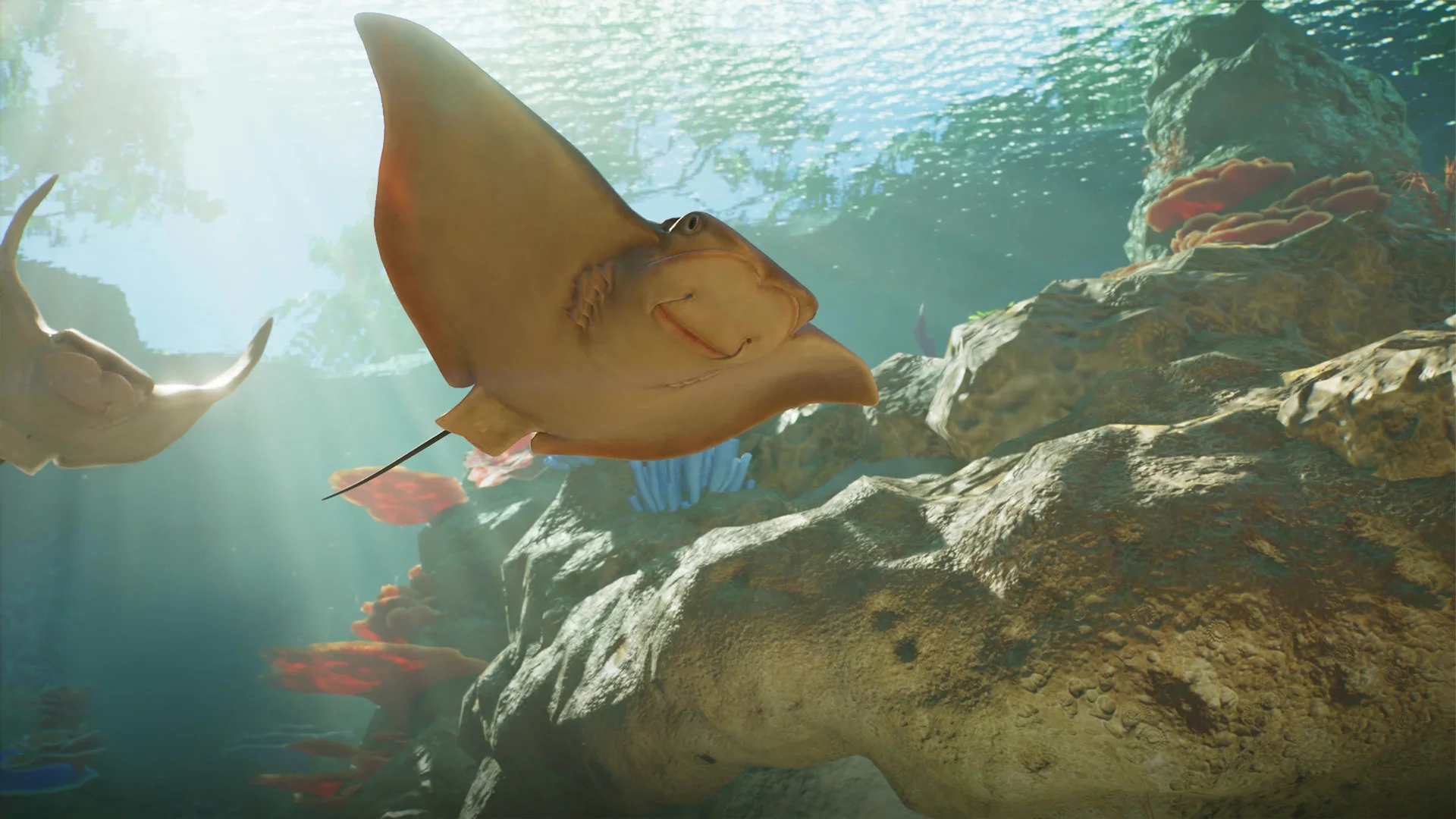
The Javanese cownose ray (or Rhinoptera javanica) is a coastal species found in the warm, shallow waters of the Indo-Pacific region, ranging from the Red Sea and eastern Africa across the Indian Ocean to Southeast Asia and northern Australia. It prefers sandy or muddy sea beds near coral reefs, estuaries, and bays, where it feeds on benthic invertebrates such as molluscs and crustaceans.
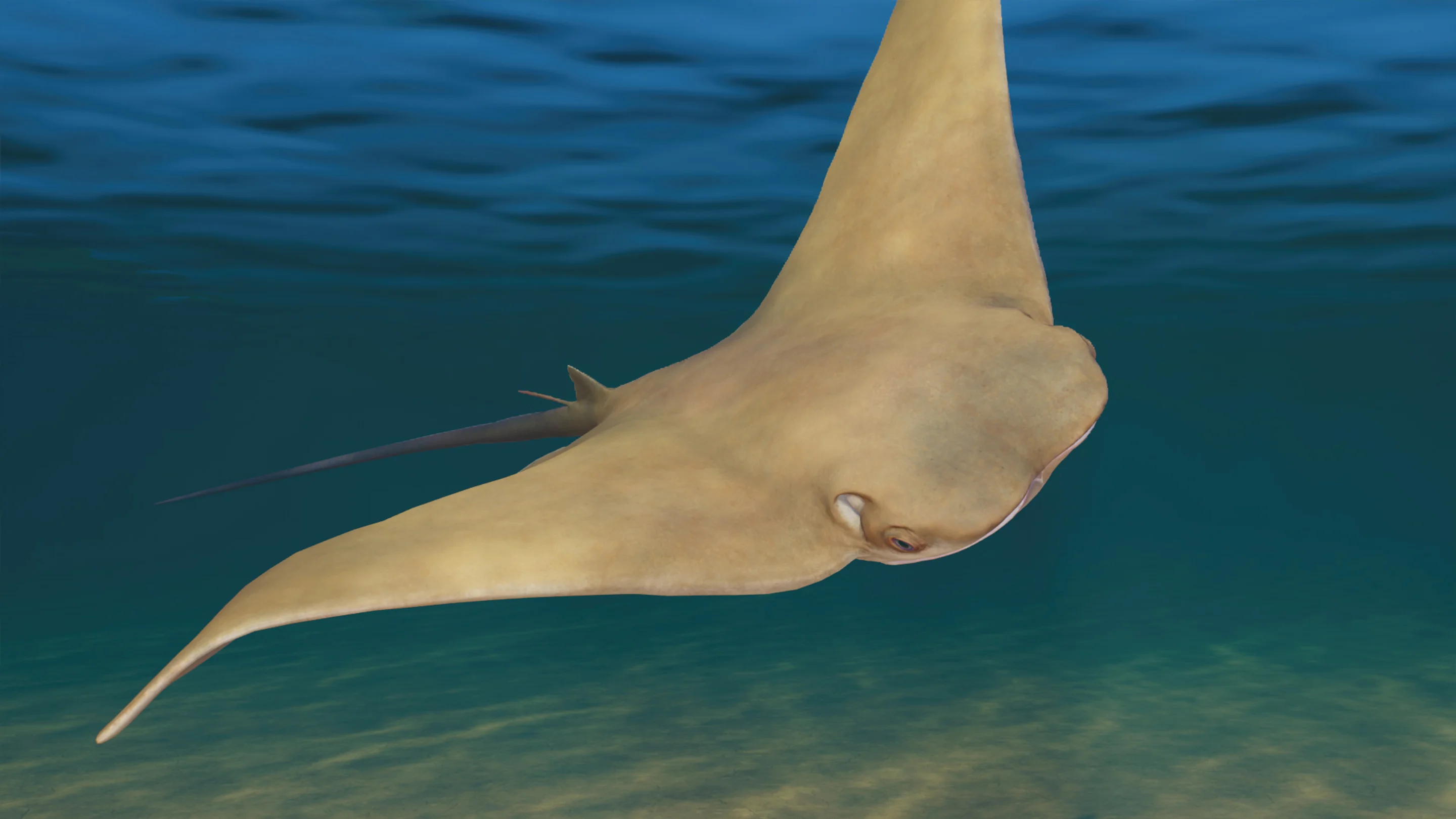
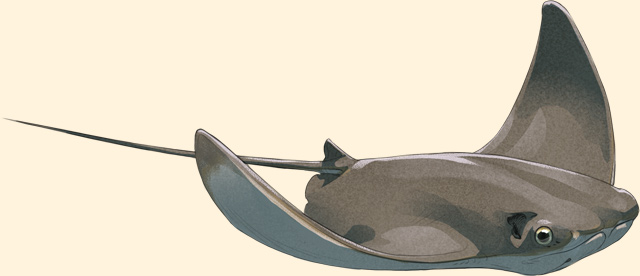
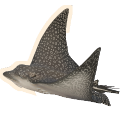
This ray is easily recognised by its distinct head shape, featuring a broad, rounded snout with a central notch that resembles a cow’s nose. Its body is diamond-shaped with long, pointed pectoral fins and a whip-like tail. The upper surface is typically brown to grey, while the underside is pale.
Adult Javanese cownose rays can reach a disc width of up to about 1.5m, with a body length of 2m including the tail. They generally weigh 20kg to 40kg, though size can vary depending on habitat and food availability.
Javanese cownose rays often swim in large groups, sometimes numbering in the hundreds, which helps them search for food and avoid predators.
Enrichments
Food-Based Enrichments
Forage Tray
Habitat Enrichments
Submarine Buoy
Water Hoop
Bubble Blower - Airstone
Lattice Ball
Conservation Topics
Ocean Ecosystem Ambience
Diurnal Behaviour
Bycatch
Habitat Loss
Overexploitation
Carnivore Diet
Shark and Ray Evolution
Javanese Cownose Ray Fact Sheet
Swimming Animals
Underwater Life Talk
Javanese Cownose Ray Name Plate
Lifecycle
Javanese cownose rays often swim in large groups, sometimes numbering in the hundreds, which helps them search for food and avoid predators.
Breeding season is between late spring and summer. Courtship usually involves males closely following females, nipping at their pectoral fins, and attempting to grasp them for copulation. Like other rays, males have modified pelvic fins called claspers, which are used to transfer sperm to the female during mating. This pairing behaviour often occurs in shallow coastal waters where rays congregate, and it can look quite vigorous as males try to position themselves for successful fertilisation.
Reproduction in this species is aplacental viviparous, meaning embryos develop inside the female. The gestation period is thought to last several months, though exact timing is not well documented for this species. Females give birth to a small number of live young, often just one to four pups, which are miniature versions of the adults and fully independent at birth.
Males reach sexual maturity between 4 and 5 years old, and females between 5 and 7 years old. Maximum growth usually takes 5 or 6 years.
Statistics
Litter Size
1-2
Gestation / Incubation Period
12 months
Interbirth Period
12 months
Reproduction Difficulty
Easy
Age Of Sexual Sterility
death
Age Of Sexual Maturity
5 years
Juvenile5 years
Adult9 years
Elderly6 years
Animal Facts
Javanese cownose rays use their powerful jaws and flat teeth to crush hard-shelled prey like clams, oysters, and crabs.
Unlike stingrays, the Javanese cownose ray does not have a venomous barb, making it harmless to humans.
When Javanese cownose rays are pregnant, the pups are initially nourished by yolk, and later by nutrient-rich uterine milk.
While Javanese cownose rays mainly crush shellfish for food, they can also filter smaller organisms from the sediment.
When feeding in groups, Javanese cownose rays sometimes stir up the sand together, making it easier to uncover buried clams and crustaceans.
Conservation
The Javanese cownose ray is considered Endangered. Fishing gear catches this species unintentionally as bycatch across its whole range, and the species is also directly fished for meat or trade in some regions. As a result, some populations have reduced 50 to 79% over the past 44 years. Habitat degradation is common due to coastal development, destructive fishing methods, and disturbances in mangroves, estuaries, or seagrass that reduce suitable feeding and breeding grounds. The Javanese cownose ray has low fecundity, slow growth and late maturity and cannot rebound quickly from heavy mortality.
Some local efforts regulate fishing practices to reduce bycatch and over-exploitation, and improving monitoring quantifies catches, trends, and habitat use.
Currently there is no comprehensive conservation program specifically for the Javanese cownose ray. Proposed measures include protected areas, fishing quotas or bans, and habitat protection, but gaps remain in enforcement, fishing regulations, protected area coverage, and species-specific research.
Native Range
Indo-Pacific reefs and coasts
Statistics
Wild Population
Unknown
Conservation Status
Endangered
Valid Release Group Types
Mixed Group
Are you ready to run a zoo?
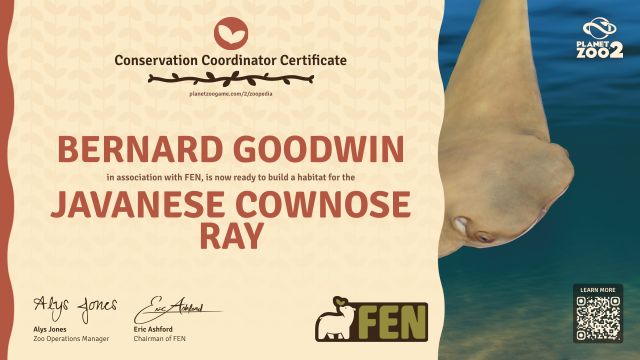
Prove your knowledge and create a personalised certificate endorsed by the Fauna & Ecosystems Network for the Javanese Cownose Ray.
Planet Zoo 2 is in active development and the Zoopedia reflects this work in progress. Text, images, stats etc. are not necessarily final and may change or be expanded upon.





 Forage Tray
 Submarine Buoy
 Water Hoop
 Bubble Blower - Airstone
 Lattice Ball