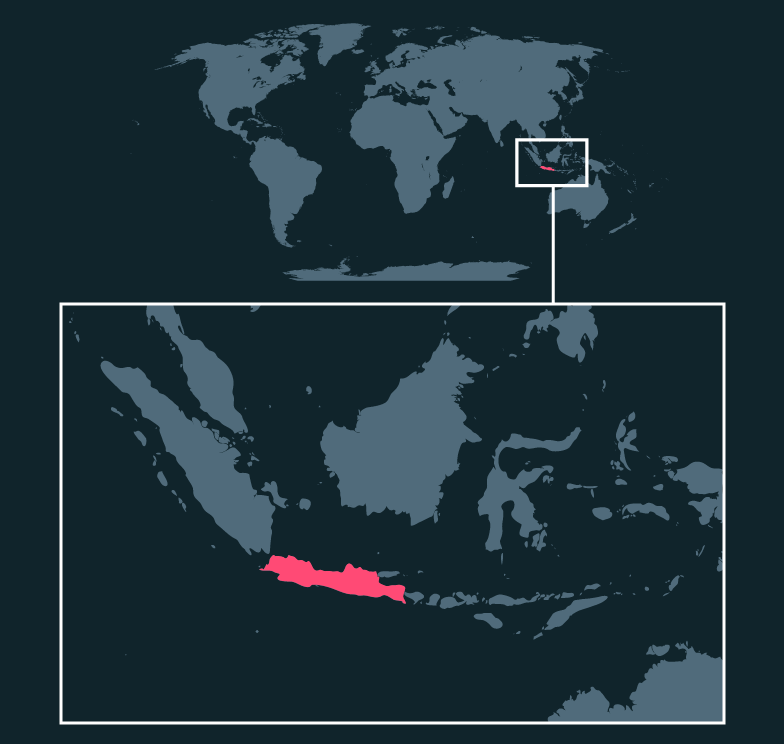
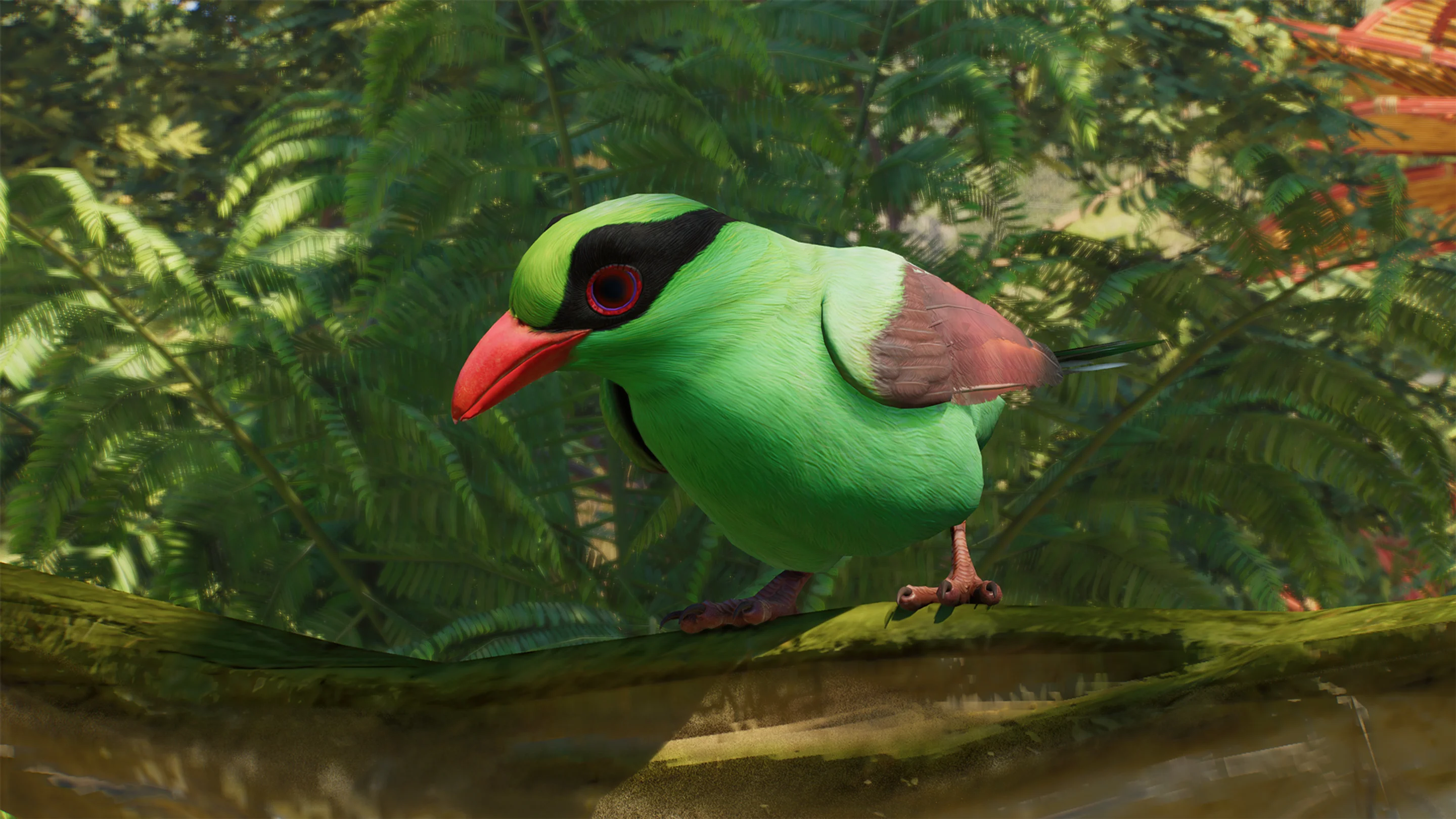
The Javan green magpie (or Cissa thalassina) is an endemic passerine bird species found only on the Indonesian island of Java, primarily in the Western and Central regions. It inhabits dense, humid montane and sub-montane forests with thick vegetation.
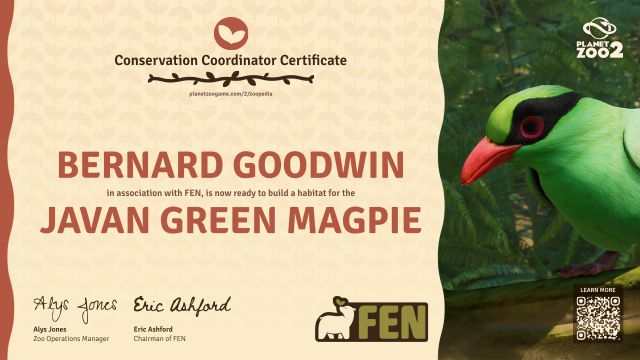
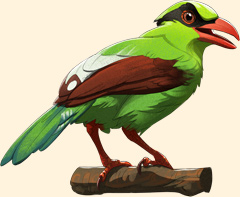
The species is renowned for its striking bright green plumage and black mask across the eyes, reddish-orange bill, and bluish wings and tail tips.
Sexual dimorphism is minimal, but males are generally slightly larger than females. Adults typically measure 29cm to 31cm long, with males weighing around 130g to 140g and females slightly lighter at 120g to 130g.
The Javan green magpie lives in bonded monogamous pairs or small family groups.
Enrichments
Food-Based Enrichments
Bamboo Feeder
Perch Feeder
Habitat Enrichments
Suspended Perch
Perch 01
Perch 02
Treasure Box
Shredding Perch
Shredding Paper
Conservation Topics
Rainforest Ecosystem Ambience
Diurnal Behaviour
Habitat Loss
Poaching and the Exotic Pet Trade
Carnivore Diet
Bird Evolution
Javan Green Magpie Fact Sheet
Flying Animals
Lives of Birds Talk
Deforestation
Javan Green Magpie Name Plate
Lifecycle
The Javan green magpie lives in bonded monogamous pairs or small family groups.
The Javan green magpie forms long-term monogamous pair bonds. Breeding occurs from October to April, coinciding with high food availability. Courtship involves a combination of vocalisations, mutual preening, and display behaviours, such as tail spreading. Pairs are highly territorial, especially when nesting, to defend their offspring and foraging grounds. Before mating, the birds construct a cup-shaped nest together from twigs, leaves and moss.
2 to 4 eggs are laid into the nest, which are then incubated for 17 to 19 days. Both parents provide food and care for the chicks after hatching, providing insects and small invertebrates. At around 3 to 4 weeks old, the juveniles fledge, but remain near their parents for another few weeks to learn essential foraging skills.
Sexual maturity is reached at approximately 2 years old, at which point the young magpies fully disperse and search for their own territory and mate.
Statistics
Litter Size
2-4
Gestation / Incubation Period
0 months
Interbirth Period
12 months
Reproduction Difficulty
Easy
Age Of Sexual Sterility
death
Age Of Sexual Maturity
2 years
Juvenile2 years
Adult5 years
Elderly8 years
Animal Facts
The Javan green magpie is highly vocal, using whistles and calls to maintain contact with mates and family members in dense forest cover.
The Javan green magpie prefers cool, humid montane forests rather than lowland habitats.
The Javan green magpie’s nests are typically built 2m to 3m above ground in dense foliage using twigs, bamboo leaves, and moss to provide camouflage.
Javan green magpies are corvids, thus they are intelligent, showing problem-solving skills and adaptability in captivity.
Javan green magpies can temporarily lose their green colour if stressed or poorly fed in captivity, as carotenoids in their diet are essential for plumage colouration.
Conservation
The Javan green magpie is Critically Endangered, primarily threatened by illegal trapping and habitat loss. Once widespread, it has been reduced to as few as 50 wild individuals in just four protected areas. Its striking appearance has made it highly sought after in Southeast Asia’s illegal songbird trade. Additionally, deforestation fragments its habitat, making it increasingly difficult for the species to survive in the wild.
Concerted conservation efforts are in place to save this bird from extinction. The EAZA focuses on rescuing individuals from the illegal trade and managing captive populations to ensure the species' survival. Many zoos successfully breed Javan green magpies to ensure a healthy insurance population. The Javan green magpie was the face of the ‘Silent Forest’ campaign in European zoos, raising awareness for the songbird trade crisis. In-situ, habitat surveys and monitoring programmes identify viable habitats to guide future strategies, and rehabilitate rescued birds.
These combined efforts aim to protect the remaining wild populations and establish a sustainable future for the Javan green magpie.
Native Range
Southeast Asia
Statistics
Wild Population
50 - 250
Conservation Status
Critically Endangered
Valid Release Group Types
Breeding Partners
Are you ready to run a zoo?
Prove your knowledge and create a personalised certificate endorsed by the Fauna & Ecosystems Network for the Javan Green Magpie.
Planet Zoo 2 is in active development and the Zoopedia reflects this work in progress. Text, images, stats etc. are not necessarily final and may change or be expanded upon.






 Bamboo Feeder
 Perch Feeder
 Suspended Perch
 Perch 01
 Perch 02
 Treasure Box
 Shredding Perch
 Shredding Paper