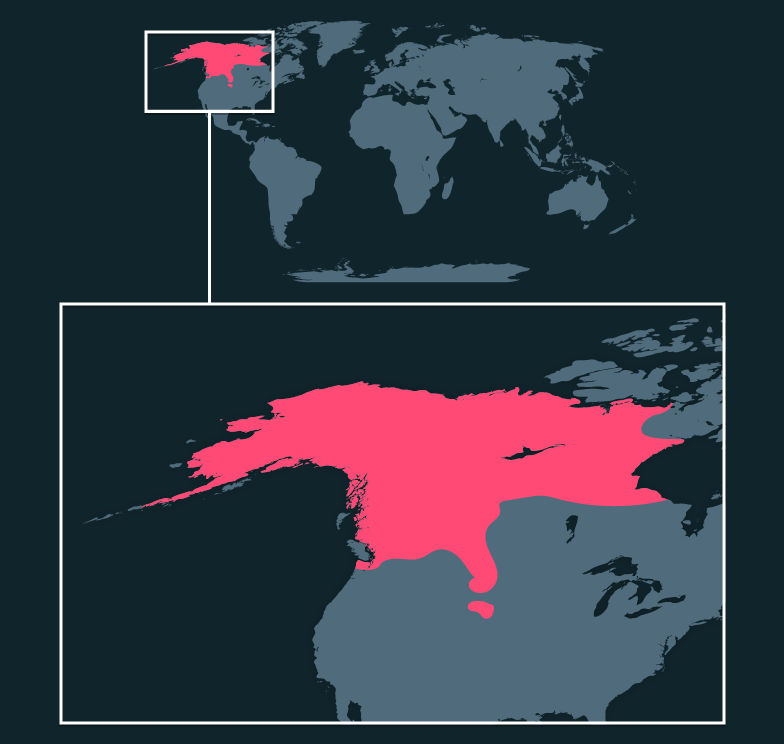
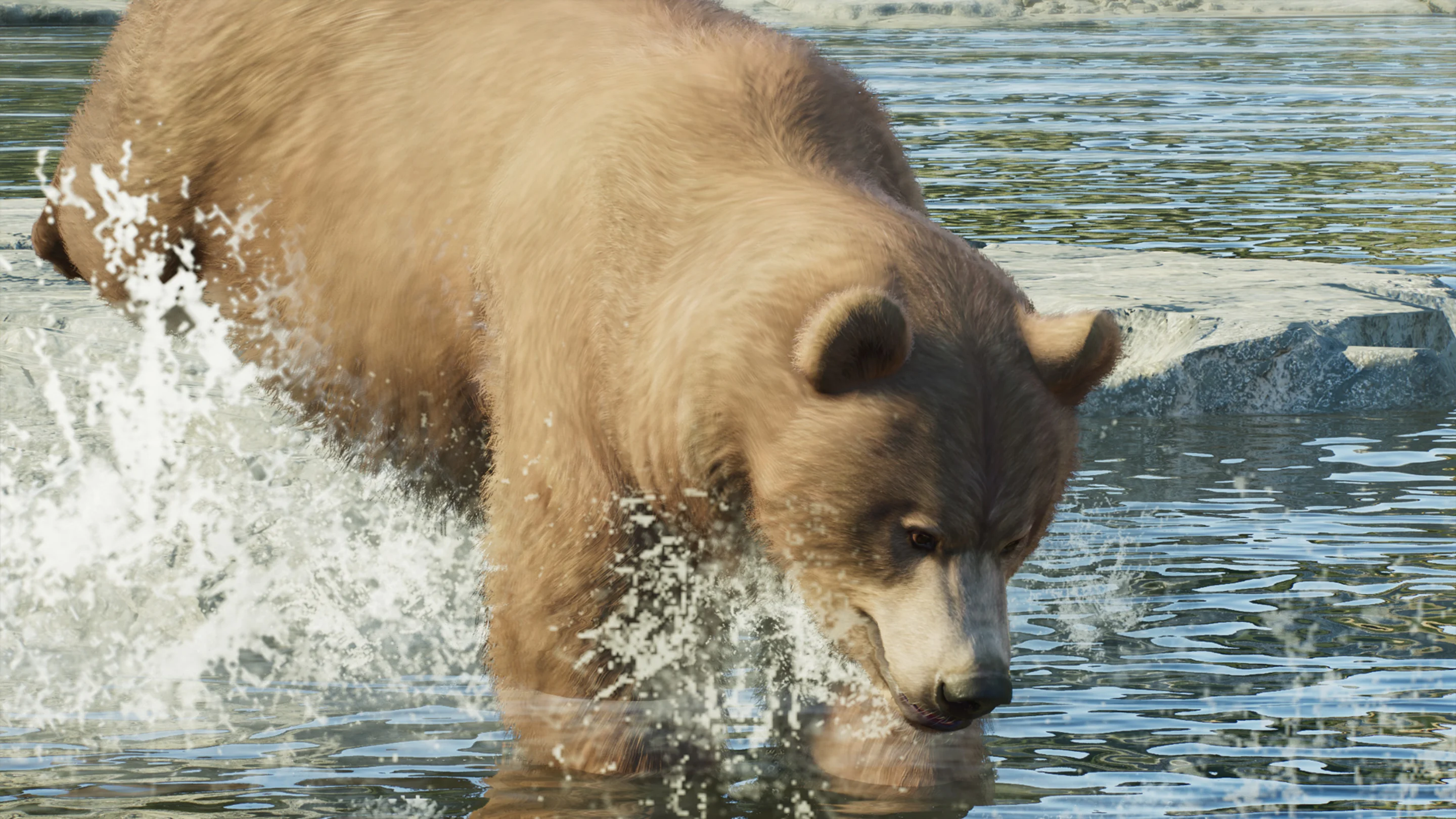
Native to the northern USA and Canada, the grizzly bear (or Ursus arctos horribilis) is a subspecies of the brown bear.
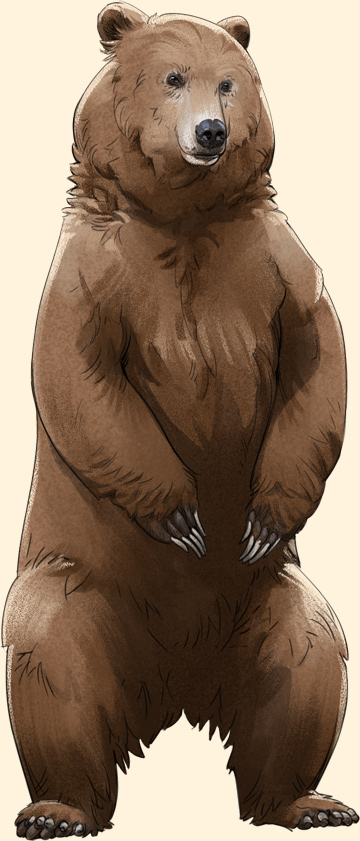
A grizzly can be identified by its thick, brown fur, a large shoulder hump, straight snout and rounded ears. They have strong front legs with long claws used for digging and hunting.
They can grow extremely large, though there is a lot of variation in size between different populations. The average male measures 2.2m long in head-body length and weighs 240kg, while an average female measures 1.8m in head-body length and weighs 160kg.
Male bears will fight over foraging grounds and mates.
Guests Can Walk Through
false
Grizzly bears are solitary, the only exception being a mother with her cubs. They only interact with each other to mate or fight over mates. They may be seen in close quarters when there is a desirable food source, such as gathering at a river's edge during the salmon spawning season. However, bears will usually ignore each other if they come across one another.
Enrichments
Food-Based Enrichments
Bamboo Feeder
Block of Frozen Fish
Block of Frozen Fruit
Frozen Blood Pumpkin
Foraging Wall
Grazing Ball Feeder
Fixed Roller Feeder - Large
Melon Feeder
Tree Scatter Feeder
Habitat Enrichments
Herb Scent Marker
Rubbing Pillar
Tyre
Wind Chimes
Large Ball
Bobbin
Bobbin Drum
Ice Block
Prey-scented Sack
Firehose Ball
Ball on Chain
Conservation Topics
Forest Ecosystem Ambience
Crepuscular Behaviour
Omnivore Diet
Mammal Evolution
Grizzly Bear Fact Sheet
Vocal Animals
The Animal Kingdom Talk
Genetic Bottlenecks
Population Fragmentation
Ecological Restoration
Grizzly Bear Name Plate
Lifecycle
Grizzly bears are solitary, the only exception being a mother with her cubs. They only interact with each other to mate or fight over mates. They may be seen in close quarters when there is a desirable food source, such as gathering at a river's edge during the salmon spawning season. However, bears will usually ignore each other if they come across one another.
From May to June, male grizzly bears track females using the scent of their urine. When a male and female meet, they will play together; wrestling and pawing each other before mating. Males will be aggressively fighting off rivals in order to mate with a female.
Females undergo delayed implantation, so that the young are born during hibernation in the winter, after a pregnancy of about 6 months. Litters range from 1 to 4 cubs. The cubs will search out milk and suckle from their mother until the end of hibernation, when they will leave the den and have their first solid food. The mother won’t mate while she is caring for her offspring, and may also not produce a new litter for a few years after their dispersal.
The bear cubs stay with their mother until they are 2 to 3 years old, at which point they will leave to establish their own territory. However, they aren’t sexually mature until 5 years old, and males may only be strong enough to secure a mate until 7 years or older.
Colourmorphs
Leucistic
Statistics
Litter Size
1-4
Gestation / Incubation Period
7 months
Interbirth Period
52 months
Reproduction Difficulty
Easy
Age Of Sexual Sterility
25 years
Age Of Sexual Maturity
5 years
Juvenile5 years
Adult20 years
Elderly1 years
Animal Facts
Wild grizzly bears hibernate for 5 to 7 months a year; they will eat huge amounts before hibernating to gain enough weight to survive this time without eating.
The 'hump' visible on a grizzly bear's back is a large amount of muscle that bears use when digging dens or hunting prey.
Grizzly bears can gain 180kg of weight when preparing for hibernation.
In the wild each cub in a grizzly bear litter may have a different father.
Grizzly bears love to eat moths, and will make the extra effort to find moths by climbing to high altitudes and overturning rocks.
Conservation
Assessed as Least Concern today, the grizzly bear is present in only a small area of its former range across North America. Historically, European settlement as well as bounty programmes in the 19th and 20th centuries decimated populations to a few hundred bears by the 1970s. Today, populations in national parks are recovering, but the grizzly remains under threat from infrastructure development, climate change, human-wildlife conflict and poaching.
Conservation actions consist of habitat protection and management, human-wildlife conflict mitigation and legal protection. As part of a recovery plan, core ecosystems in their range are identified, and large, interconnected landscapes that can support viable populations are preserved. To reduce wildlife conflict, bear-proof infrastructure and public awareness about safe food storage practices are applied.
Efforts also include proposals for future reintroductions into historic habitats such as the North Cascades.
Native Range
North America
Statistics
Wild Population
55,000 - 60,000
Conservation Status
Least Concern
Valid Release Group Types
Mixed Group
Female Bachelor Herd
Solitary Male
Are you ready to run a zoo?
Prove your knowledge and create a personalised certificate endorsed by the Fauna & Ecosystems Network for the Grizzly Bear.
Planet Zoo 2 is in active development and the Zoopedia reflects this work in progress. Text, images, stats etc. are not necessarily final and may change or be expanded upon.



 Bamboo Feeder
 Block of Frozen Fish
 Block of Frozen Fruit
 Frozen Blood Pumpkin
 Foraging Wall
 Grazing Ball Feeder
 Fixed Roller Feeder - Large
 Melon Feeder
 Tree Scatter Feeder
 Herb Scent Marker
 Rubbing Pillar
 Tyre
 Wind Chimes
 Large Ball
 Bobbin
 Bobbin Drum
 Ice Block
 Prey-scented Sack
 Firehose Ball
 Ball on Chain