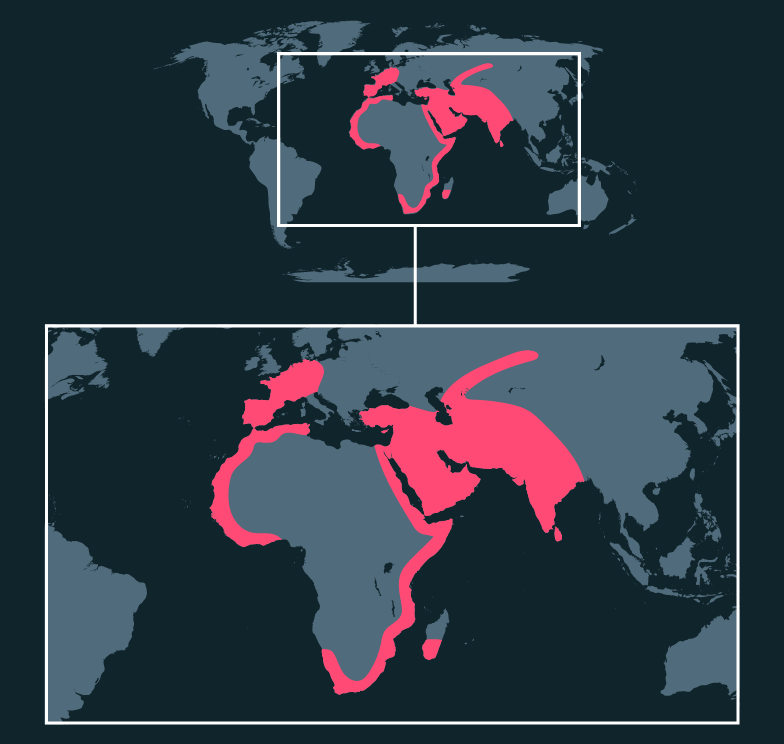
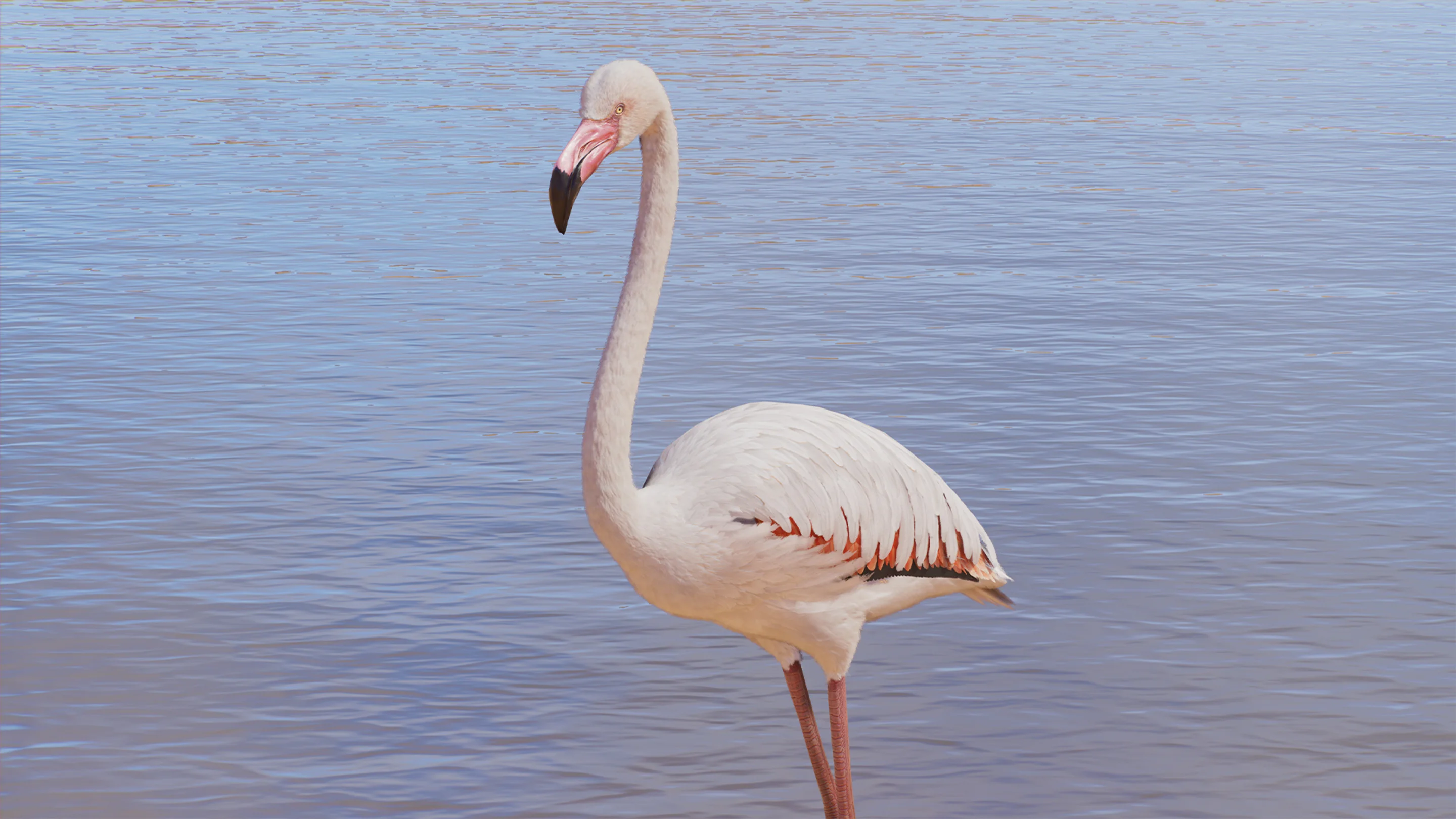
The greater flamingo (or Phoenicopterus roseus) is a large species of migratory bird that is widespread across Europe, the Middle East, Asia and Africa. It lives on the mudflats and coastal lagoons of temperate and warm environments, and is a filter feeder which uses its beak to stir up mud and filter out algae, invertebrates and seeds.
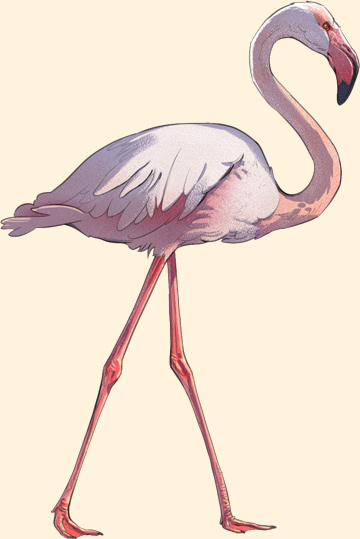
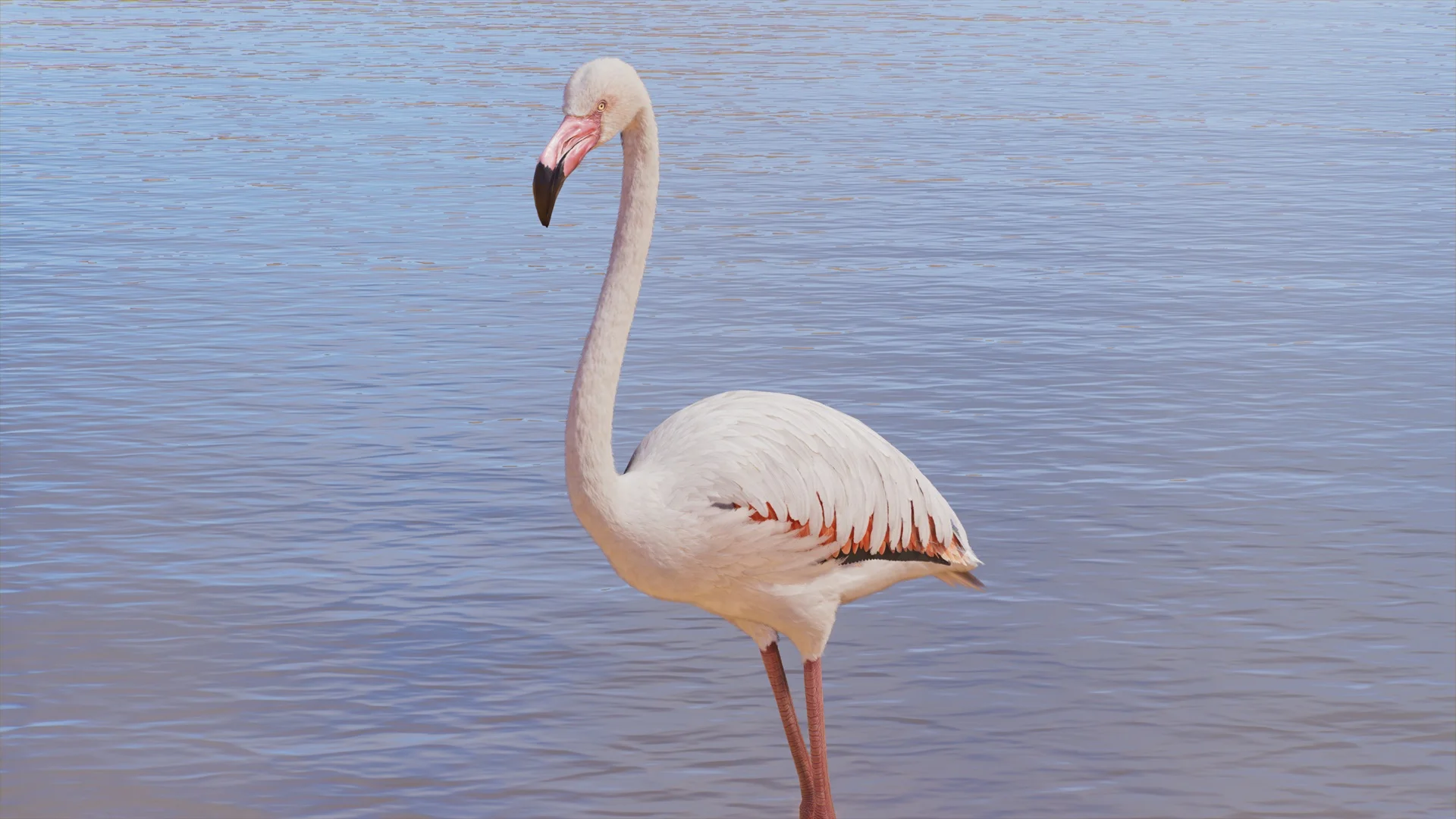
They are covered with pale-pink to orange-pink feathers, pink legs and a pink beak with a black tip. They have black flight feathers and often brighter pink patches on their wings.
Male and female flamingoes look the same, measuring between 1.1m and 1.5m tall, and weighing between 2kg and 4kg.
Get inspiration for your habitats in Planet Zoo 2 on October 13! We talked to Heather Anne Pedley, the Greater Flamingo keeper at Chester Zoo, about the beautif...
Greater flamingoes are social animals and prefer to live in a large flock. Although mating may be monogamous, group members will often help each other protect and feed chicks.
Enrichments
Food-Based Enrichments
Forage Pool
Slow Feeder
Habitat Enrichments
Mirror Mobile
Sprinkler
Small Ball
Platform Floats
Waterfall and Metal Frame
Conservation Topics
Wetland Ecosystem Ambience
Diurnal Behaviour
Omnivore Diet
Bird Evolution
Greater Flamingo Fact Sheet
Flying Animals
Lives of Birds Talk
Pollution
Habitat Loss
Greater Flamingo Name Plate
Lifecycle
Greater flamingoes are social animals and prefer to live in a large flock. Although mating may be monogamous, group members will often help each other protect and feed chicks.
Greater flamingoes mate throughout April and May. In order to attract a mate, both sexes of flamingo perform synchronised 'dances' which involve neck stretching, preening and wing movements – all done at the same time as part of a large group. Once a female has been suitably impressed by a male's appearance and dance, she will move away from the group and he will follow. She will then put her neck down and spread her wings, inviting the male to mate with her. Flamingoes are monogamous – some for a season, some for life.
Together, the two partners will build a mound of mud with a depression in the top as their nest, in which the female will lay a single egg. It is incubated there for 27 to 31 days by both the mother and father, and is fed by regurgitated 'crop milk' for the first 3 to 4 weeks of its life. After this, it will begin filter feeding and, at 10 weeks old, the chicks fledge, but they will live in a crèche that is looked over by a non-breeding adult for another month thereafter.
The birds are fully grown at 2 years old and sexually mature at 3, although they are unlikely to mate until they are between 5 and 10.
Colourmorphs
Melanistic
Statistics
Litter Size
1-1
Gestation / Incubation Period
0 months
Interbirth Period
11 months
Reproduction Difficulty
Easy
Age Of Sexual Sterility
death
Age Of Sexual Maturity
3 years
Juvenile3 years
Adult24 years
Elderly23 years
Animal Facts
Flamingoes develop their pink colouration from the food they eat; they accumulate carotenoid pigments in their feathers from the algae and invertebrates they feed upon.
Parent flamingoes can identify their chick's cry from within a crowd of thousands of other flamingoes.
Flamingoes are born with straight beaks; the beak starts to curve when they are 1 month old and allows them to filter feed.
Flamingoes often stand on one leg and also do this when sleeping. This is believed to be to prevent heat loss; only one leg is exposed to cold air or water.
The earliest forms of flamingoes are seen 40 million years ago in the fossil record.
Conservation
The greater flamingo is of Least Concern and not endangered, but is still affected by the increasing degradation of the saline and alkaline wetlands that they depend on. Wetland drainage, water diversion or pollution for agriculture or infrastructure kills many of the invertebrates on which flamingoes feed and damages suitable breeding habitat. Local disturbances from human recreational activities or livestock may also lead to colony abandonment.
Habitat protection and management initiatives such as water quality monitoring, protection of important breeding and stopover sites, and public awareness campaigns are confronting these threats. International frameworks such as the African-Eurasian Migratory Waterbirds Agreement (AEWA) aid coordination of international conservation efforts, while national governments have protected key sites to safeguard breeding and migrating birds.
As the largest flamingo species and colourful wader, the greater flamingo also often stands in as an Ambassador species in captivity, with donation and adoption funds also contributing towards conservation efforts for other species.
Native Range
Africa, Asia, Europe
Statistics
Wild Population
550,000 - 910,000
Conservation Status
Least Concern
Valid Reserves
Great Rift Valley Reserve
Tanzania Reserve
Valid Release Group Types
Mixed Group
Are you ready to run a zoo?
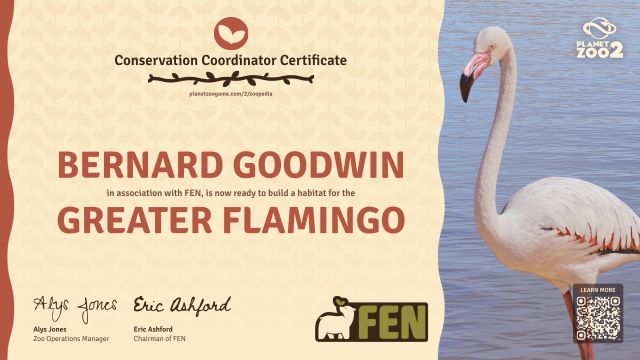
Prove your knowledge and create a personalised certificate endorsed by the Fauna & Ecosystems Network for the Greater Flamingo.
Planet Zoo 2 is in active development and the Zoopedia reflects this work in progress. Text, images, stats etc. are not necessarily final and may change or be expanded upon.





 Forage Pool
 Slow Feeder
 Mirror Mobile
 Sprinkler
 Small Ball
 Platform Floats
 Waterfall and Metal Frame